Summary:
HubSpot's recent updates include hard usage limits for its Breeze AI assistant, capping content-generation requests at 30 per minute and 1,000 per day, which may affect marketing teams relying heavily on AI. The updates also introduce practical features like email export options and Canva integration, though with limitations such as restricted design portability. While these changes aim to streamline operations, they highlight HubSpot's strategy of maintaining human involvement by setting boundaries on AI capabilities.
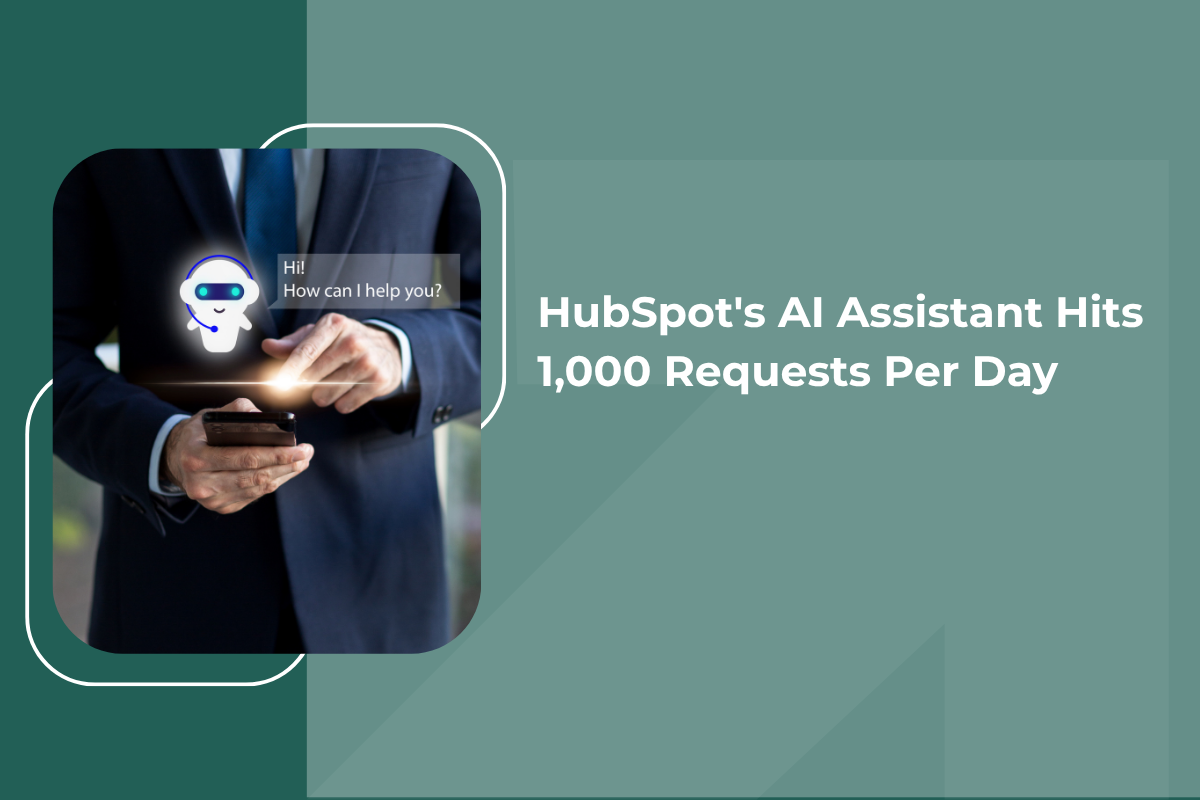
HubSpot just documented hard usage limits for its Breeze AI assistant: 30 content-generation requests per minute and 1,000 per day. If you were planning to let your whole marketing team lean on AI for report summaries and content ideas, you now know exactly where the ceiling is.
The constraint showed up quietly in HubSpot's March 2026 product updates, alongside a bundle of friction-cutting features that won't make headlines but will save marketers from a dozen small annoyances. You can now export marketing emails to PDF or HTML (finally, no more screenshot approvals), clone repetitive workflow actions instead of rebuilding them, trigger automations based on campaign budget or spend, and create Canva graphics without leaving HubSpot.
None of this is revolutionary. It's table stakes dressed up as innovation. But the real story is what HubSpot isn't saying: there are no performance benchmarks, no customer outcome data, no sample sizes. The release notes describe what's possible, not what actually improved. PDF export "expands reuse and archiving options." Campaign triggers let you "respond to conditions without manual monitoring." Breeze summaries "reduce first-pass analysis effort." All true, all vague, all impossible to budget around.
The Canva integration is available across every HubSpot plan, which sounds generous until you hit the fine print: you can't import Canva fonts or brand kits into HubSpot editors. So much for full-fidelity design portability. Meanwhile, Breeze won't summarize survey feedback until you collect at least three responses, and HubSpot's own documentation warns the AI can generate incorrect or misleading output that requires human review.
What's useful here is the shift from one-off asset production to something more modular. Teams can now standardize templates, automate approvals, and stop manually watching campaign budgets. But you're still setting up workflows by hand, navigating beta flags, and working around permission dependencies.
The tension? HubSpot is selling you the dream of automated marketing operations while building in enough guardrails to ensure you'll still need humans in the loop. The 1,000-request daily cap isn't a bug; it's a boundary that keeps AI assistants exactly where HubSpot wants them - helpful, but never autonomous.