Summary:
OpenAI Codex is transforming from a coding assistant into a comprehensive AI productivity tool that automates and manages business tasks across various applications. It facilitates planning, execution, and iteration of workflows, offering real-time visibility and integration with everyday tools. This evolution enhances efficiency in marketing, advertising, and content production, allowing businesses to reduce manual processes and scale operations effectively. Codex represents a shift towards AI systems that not only generate but also execute tasks, blurring the line between human and AI-driven work.
Table of Contents
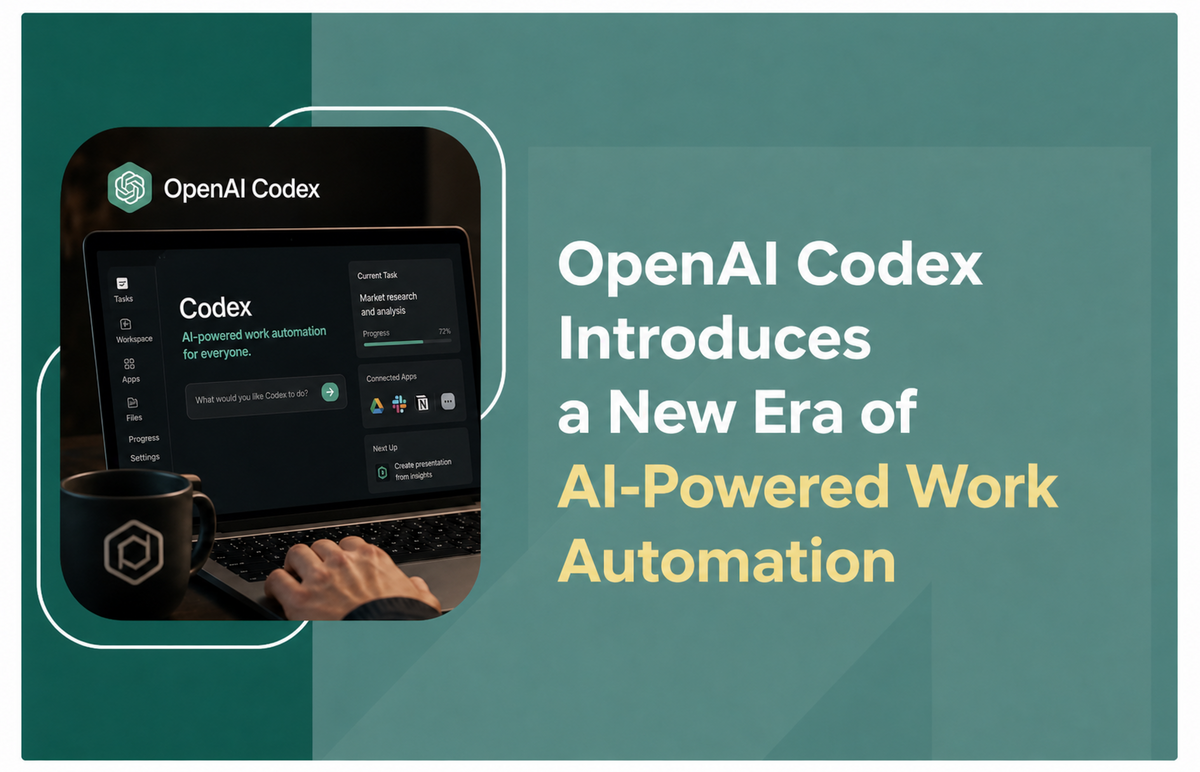
OpenAI Codex Introduces a New Era of AI-Powered Work Automation
In a major leap beyond coding, OpenAI Codex is redefining how individuals and teams get work done. What began as an AI coding assistant is now evolving into a full-scale AI productivity engine that can plan, execute, and iterate across everyday business tasks.
What Happened
OpenAI has expanded Codex into a multi-functional AI assistant capable of integrating with everyday tools and workflows. Users can now assign roles, connect apps, and execute complex tasks ranging from research and planning to document and presentation creation.
Codex doesn’t just generate outputs. It actively manages workflows, tracks progress, and allows users to refine results within the same thread.
Key Features and Updates
1. AI-Powered Task Execution
Codex can plan next steps, organize research, and generate outputs like documents, slides, and spreadsheets.
2. Cross-App Intelligence
It connects with multiple tools and consolidates data into actionable insights.
3. Real-Time Workflow Visibility
Users can track what Codex is doing, which files it is using, and what comes next.
4. Iterative Workflows
From draft to final output, users can refine results continuously within the same interface.
5. Personal AI Assistant for Everyone
Codex positions itself as a universal assistant, not limited to developers.
Why It Matters for AI Marketing and Ads
This evolution has massive implications for:
AI Marketing
Codex can plan campaigns, organize research, and generate marketing strategies.
AI Ads
It can assist in structuring ad creatives, messaging, and campaign frameworks.
Performance Marketing
By automating workflows and insights, Codex enables faster optimization cycles.
AI Video and Image Generation
When combined with generation tools, Codex acts as the planning and orchestration layer.
This shifts AI from a tool to a system.
Industry Impact
The launch signals a clear transition:
From → AI tools that generate
To → AI systems that execute
Businesses can now:
- Reduce manual workflows
- Accelerate content production
- Improve decision-making with AI-driven insights
- Scale operations without proportional team growth
For marketers, founders, and teams, this means faster execution across Google Ads, Meta Ads, and content funnels.
Future Implications
Codex represents the beginning of agent-driven work environments where AI:
- Manages workflows end-to-end
- Collaborates across tools
- Continuously improves outputs
The boundary between human work and AI execution is rapidly disappearing.
Where GrowEasy Fits In
AI is the brain
GrowEasy is the execution engine
While Codex plans and generates strategies, GrowEasy:
- Executes AI-generated campaigns
- Automates Google Ads and Meta Ads
- Optimizes performance marketing funnels
- Scales content including ads, blogs, and creatives
- Acts as the deployment layer for AI tools
Together, they create a full-stack AI marketing system:
Plan with AI → Execute with GrowEasy → Scale automatically