
A few years ago, running online ads in India felt like a simple task.
You picked a platform, set a budget, wrote the copy, and traffic showed up. Clicks came in. Leads followed, and growth felt predictable.
Today, many marketers open their dashboards with a very different feeling.
Spending keeps rising, and reports look busy, but answers feel missing. Campaigns run across platforms, yet clarity stays out of reach. What once felt like progress now feels like friction.
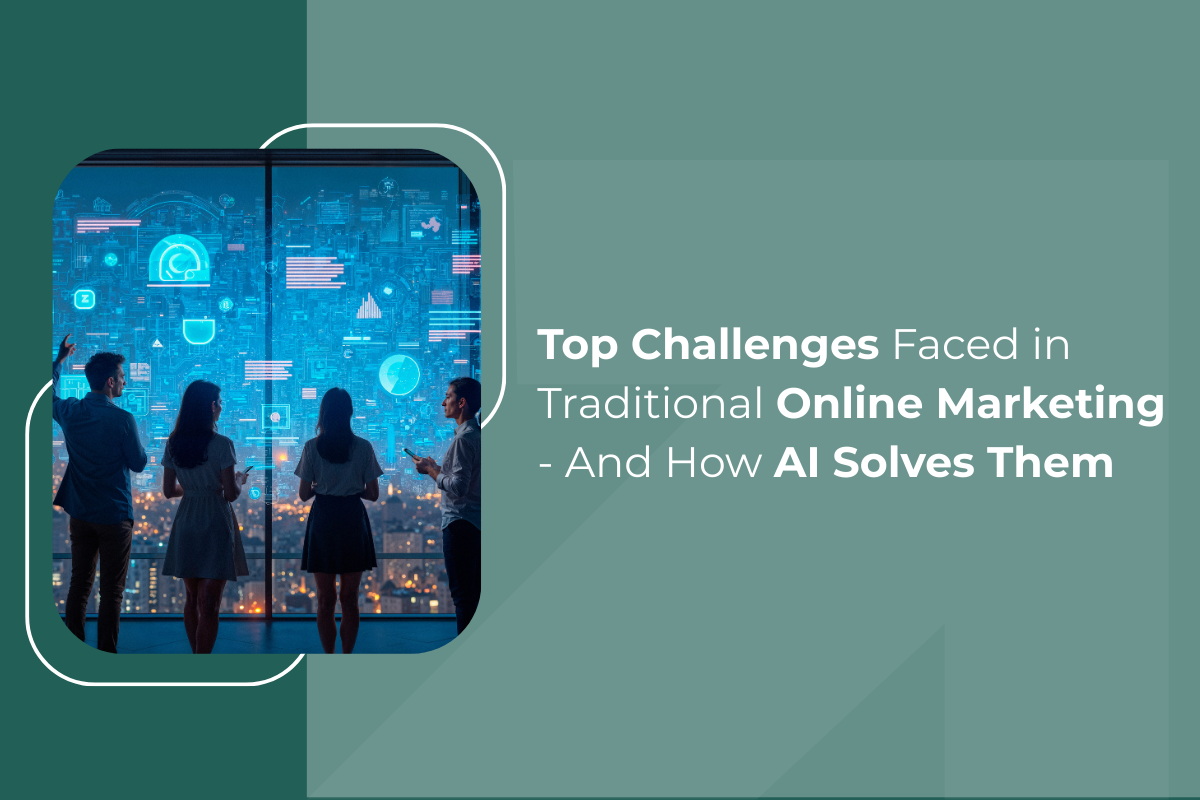
This shift sits at the heart of modern digital marketing challenges. And it explains why more Indian businesses are turning to AI-powered digital marketing services to regain control over targeting, performance, and scalability.
What Are The Biggest Digital Marketing Challenges Indian Brands Face?
1 Ad Fatigue and Ad Blindness Are Now the Default State
Indian consumers see ads everywhere. Between social feeds, OTT platforms, search results, shopping apps, and notifications, marketing messages follow them through the day. People skip, mute, scroll past, or mentally block what they see.
Recent data shows that 7 out of 10 Indians actively tune out digital ads, placing India among the top three countries globally for ad fatigue. This is active avoidance.
A major reason lies in how campaigns are planned. Brands often recycle the same creative across platforms,, relying on repetition instead of relevance. Without access to AI-driven ad copy and creative optimisation, campaigns quickly lose freshness, leading to ad fatigue and declining engagement across channels.
Multichannel campaigns frequently run without coordination. Messaging varies slightly, timing clashes, and audiences see the same ad too often on one platform while missing it entirely on another.
Industry observations point to duplicated exposure, messaging gaps, and wasted budget as direct outcomes of this fragmented execution. Attention is lost long before intent has a chance to form.
2 Poor Targeting Leads to Expensive Waste
Many campaigns rely on broad interest buckets or outdated signals. Users get grouped together based on past behaviour that no longer reflects current intent. As a result, brands pay to reach people who are unlikely to convert, while high-intent audiences remain underexposed. This is where Facebook ads audience builder tools help refine targeting using real behavioural intent and engagement patterns.
The financial impact is significant. Industry reports estimate that around 28 per cent of media budgets in APAC are wasted on misaligned placements, translating to roughly $1.45 billion lost in India alone.
Ads appear on irrelevant sites, low-quality pages, or next to content that does not match the brand context.
This problem quietly compounds. Spending increases to compensate for weak performance. ROI declines. Teams blame the creative or channels, while the real issue lies in targeting accuracy.
3 Customer Acquisition Costs Continue to Rise
For many Indian brands, especially in D2C and consumer tech, customer acquisition has become the most fragile line item in the budget. Acquiring a new customer now costs far more than it did even two years ago.
Channels that promise speed and reach, such as quick-commerce ads or high-visibility display placements, can drain budgets quickly when left unchecked. Without tight optimisation, returns flatten while costs keep climbing.
This creates pressure on margins and slows growth. Scaling no longer depends on demand alone. It depends on whether acquisition costs can be controlled without sacrificing volume.
4 Ad Fraud and Click Farms Distort Reality
Ad fraud remains one of the least visible yet most damaging digital marketing challenges.
Click farms and automated bots generate fake traffic that inflates impressions, clicks, and engagement metrics. Reports estimate that nearly 22 per cent of global online ad spend was lost to fraud in 2023, amounting to $84 billion. India is not immune.
Local verification firms warn of an increase in AI-driven fake traffic. These systems mimic human behaviour closely, making detection harder. Campaign reports look healthy on the surface, but sales fail to follow.
The danger lies in trust. Teams make decisions based on distorted data, double down on underperforming channels, and lose confidence in reporting over time.
5 Data Silos Break the Customer Story
Indian marketing teams use more tools than ever before. CRM platforms, ad dashboards, analytics suites, e-commerce systems, retail POS, and support tools all hold pieces of customer data.
Few connect cleanly.
Creative teams, media buyers, and analysts often work in isolation, each viewing a different version of performance. Industry reporting highlights how fragmented structures prevent brands from telling a consistent story across channels.
When data stays separated, personalisation weakens, and measurement becomes unclear. Decisions rely on partial visibility rather than full context.
6 Personalisation Falls Short of Expectations
Access to data has increased. Relevance has not.
Many campaigns still rely on broad segments and generic messaging. Emails differ only by first name. Ads repeat the same message regardless of user behaviour or stage in the journey.
Indian consumers, exposed to highly tailored experiences from global platforms, expect more. Industry commentary compares generic campaigns to shouting into an empty space. Engagement drops because messages fail to reflect individual needs or timing.
Brands that invest in personalisation show a different outcome. Indian examples such as food delivery apps and fashion platforms use behavioural signals to tailor notifications, recommendations, and experiences, leading to higher retention and repeat purchases.
7 Measurement and Attribution Remain Unclear
Modern customer journeys stretch across search, social, messaging apps, websites, and offline touchpoints. Pinpointing what influenced a conversion remains difficult.
Attribution models often oversimplify reality. Last-click reporting hides the impact of earlier interactions. View-through metrics inflate importance without clarity.
In India’s multi-platform environment, this challenge persists. Without accurate attribution, teams focus on surface metrics like impressions and clicks. This feeds back into ad fatigue and inefficient spending, closing the loop on many existing problems.
How AI Solves Modern Digital Marketing Challenges?
AI entered Indian marketing conversations first as automation and then as analytics support. Today, it sits much closer to the centre of decision-making. Here is how AI directly addresses the challenges Indian brands face every day.
1 Smarter Segmentation and Targeting That Reflects Real Behaviour
Traditional segmentation relies on static rules. Like age brackets or past searches that no longer reflect intent.
AI changes this by reading patterns.
Machine learning systems analyse demographics, browsing trails, purchase history, app usage, and social signals together. From this, they build living audience profiles that update continuously. These profiles focus on likelihood and timing, not just category fit.
In the Indian B2B space, platforms use AI-led scoring models to group prospects by behaviour, industry, and readiness. Sales and marketing teams spend time on leads that show momentum instead of chasing every form fill.
On the consumer side, ad-tech firms use predictive models to decide where and when ads appear. Their systems estimate which impressions are most likely to convert and adjust placements in real time. Fewer ads go to low-intent users. Budgets stretch further.
Programmatic buying also benefits. Machine learning bids on impressions that match behavioural patterns rather than broad demographics. Advertisers move from wide targeting to tightly defined lookalike groups, cutting waste while improving returns.
2 Personalisation That Moves Beyond Surface-Level Customisation
Indian consumers interact across email, SMS, apps, websites, and notifications. Treating each channel separately leads to fragmented experiences. AI brings these together.
Personalisation engines adjust content based on behaviour and context. Email platforms now use natural language processing to test subject lines, vary tone, and adjust send timing. Marketers in cities like Ahmedabad report noticeable lifts in open rates after adopting AI-generated subject lines tuned to audience response patterns.
Tools such as Mailchimp, ActiveCampaign, Brevo, and HubSpot use predictive models to decide when messages land and what content appears. New subscribers see onboarding flows. Frequent shoppers receive product-led nudges. Dormant users get reactivation messaging shaped by past behaviour.
On websites and apps, AI reshapes layouts and recommendations instantly. Indian consumer brands lead here. Zomato personalises dining suggestions across push and email based on ordering patterns. Flipkart adapts product recommendations using browsing depth, price sensitivity, and previous purchases.
The result feels less like marketing and more like relevance. Messages arrive when users are ready, not when schedules demand it.
3 Conversational AI That Turns Engagement Into Action
Chatbots have moved far beyond basic support scripts. In India, they now act as frontline marketing channels.
Platforms build AI agents for WhatsApp, web chat, and social messaging. These systems guide users through discovery, answer questions, recommend products, and even complete transactions.
Bots qualify leads, book appointments, and pass high-intent users to human teams at the right moment. They adjust tone and flow based on user responses, language preference, and past interactions. For Indian audiences that already rely on messaging apps for daily communication, this feels natural.
4 Predictive Analytics That Bring Control Back to CAC
Rising acquisition costs worry most Indian marketing teams. AI addresses this by shifting focus from short-term clicks to long-term value.
Predictive models analyse historical data to estimate Customer Lifetime Value and expected acquisition cost by channel, creative, and audience group. Campaign planning becomes forward-looking instead of reactive.
Many ad platforms now include budget recommendation engines. These systems suggest where spending should increase and where it should pull back, based on predicted returns. Money moves away from high-cost, low-value segments before losses grow.
5 Fraud Detection and Brand Safety That Protect Spend
Fraud distorts decision-making as much as it drains budgets. AI offers a strong defence.
Verification platforms use machine learning to identify abnormal patterns. These include unusual click speeds, invalid IP ranges, suspicious dwell times, and behaviour that does not match human interaction.
Contextual analysis also improves. AI scans page content to avoid unsafe environments and irrelevant placements. Ads stay aligned with brand values and audience expectations.
AI restores confidence in performance data and keeps spending focused on genuine engagement by filtering invalid traffic early.
6 Creative Productions That Keep Pace With Attention
Creative fatigue sets in fast when the same message repeats. Generative AI offers a way out.
Text, image, and video generation tools allow teams to create and test multiple variations in parallel. Indian D2C brands already use this approach. Companies have used generative systems to produce dozens of ad versions, cutting creative turnaround time dramatically.
Video personalisation has also become accessible. Platforms like Rephrase.ai enable brands to create customised videos in multiple Indian languages with minimal effort.
Large brands experiment too. Cadbury ran a campaign that let users generate personalised birthday songs. Zomato used AI-generated visuals to tap into cultural moments and spark organic sharing.
Behind the scenes, AI evaluates creative performance continuously. Underperforming versions fade quickly. Stronger ones scale. Engagement stays fresh because messaging evolves instead of repeating.
Indian Brands Are Already Shifting Their Approach
Across sectors, AI adoption has moved from experimentation to daily operations.
D2C brands rely on predictive targeting and creative testing. SaaS companies use AI to score leads and personalise onboarding. Marketplaces optimise pricing, messaging, and recommendations through machine learning.
Teams spend less time adjusting bids and more time shaping strategy.
Closing Thoughts
Online marketing in India once rewarded persistence. Spend more time, run more campaigns, follow platform advice, and growth usually follows.
That phase has passed.
Today’s digital marketing challenges stem from scale and complexity. Audiences move quickly, platforms shift rules often, and costs rise without warning. What appears to be a targeting or creative issue is often a system limitation. Human-led processes struggle to keep up with the volume of signals modern marketing produces.
AI enters at this exact point.
It handles pattern recognition, adjustment, and learning at a speed no team can match. It does not replace marketers. It removes friction from decision-making and brings clarity where manual optimisation falls short.
For Indian businesses, this matters deeply. Competition is intense, and margins leave little room for inefficiency. Teams that rely only on traditional methods will stay reactive. Those who treat AI as a supporting layer will plan with confidence and scale with control.
The real lesson behind frameworks like the Google Online Marketing Challenge was structured thinking, not tool mastery. AI extends that structure into daily execution.
Online marketing is shifting from effort-led activity to decision-led systems. Indian marketers who adapt early will find growth steadier and far more sustainable.
Easy and fast setup
Marketing Doesn't Have to Be Hard. Let AI Do the Work.
Start getting leads in 5 minutes – no marketing team needed.
Start Now