
Table of Contents
Goal-Oriented & Advanced Facebook Ad Types (2026)
Instant Experience Ads (Canvas)
AR Ads (Augmented Reality Ads)
Quick Comparison Table - Facebook Ad Types
11 Top Tips for Your Facebook Ads
1. Start with Research and Inspiration
2. Narrow Your Audience and Write for One Person
3. Create Separate Ads for Different Segments
4. Test Variations with Patience
5. Keep Headlines Short and Clear
6. Present a Strong Value Offer
8. Use Rewards to Encourage Action
11. Build Trust with Social Proof
How GrowEasy Helps Businesses Run Better Facebook Ads
AI-Powered Features That Support Better Ad Performance
Results Businesses Often See After Automation
One Dashboard for All Your Facebook Ad Types
Common Mistakes Businesses Make With AI Marketing
1 Treating AI as a Ready-to-Use Tool
4 Running AI in Isolated Departments
5 Ignoring Privacy and Ethical Concerns
6 Over-Automation Without Clear Strategy
What are the different types of audiences in Facebook ads?
When businesses talk about online advertising wins, Facebook still enters the conversation early. Not out of habit, but because few platforms offer the same reach, placement variety, and control. From the main feed to Marketplace and Messenger, Facebook quietly places brand messages where people already spend their time.
This reach alone does not drive results. What shapes performance is how well businesses understand the types of Facebook ads available to them. In 2026, each Facebook Ad Type serves a distinct role, whether the goal is visibility, engagement, or sales.
At GrowEasy, we see a pattern across industries. Brands that succeed are choosing the right types of fb ads for the right objective.
Knowing the types of Ads in Facebook helps turn a basic idea into a predictable growth channel.
What Are Facebook Ads?
Facebook ads are “paid” messages that businesses place on Facebook to reach people beyond their own page followers. The word “paid” changes everything. Organic posts move based on chance, while paid ads work through choice. With Facebook ads, brands decide who sees the message, when they see it, and what action matters most.
This control is what makes the types of Facebook ads so powerful. Every Facebook Ad Type serves a different purpose. Some bring attention, some drive clicks, and some focus on leads or sales. These types of fb ads allow brands to speak in their own voice while still reaching the audience that matters.
Advertisers choose how much to spend, whether as a total campaign amount or a daily budget. They also select how Facebook charges them, such as per view or per click, based on campaign goals. Across the different types of Ads in Facebook, billing works around outcomes rather than guesswork.
This flexibility shapes every ad idea in 2026. Instead of posting and waiting, businesses build ads with intent. That intent decides which Facebook Ad Type fits best, which audience sees it, and how success gets measured.
Goal-Oriented & Advanced Facebook Ad Types (2026)
As Facebook advertising grows more layered, brands now choose formats based on intent rather than visibility alone. The types of Facebook ads used in 2026 focus on guiding users through attention, interaction, and action within a single environment.
These advanced types of fb ads work well when businesses want more than clicks. They support storytelling, conversation, and personalised engagement across different stages of the funnel.
Understanding these types of Facebook advertising helps brands design campaigns that feel natural inside the platform. Each Facebook Ad Type below serves a clear purpose and supports a practical Facebook ads idea built around outcomes.
Instant Experience Ads (Canvas)
Instant Experience Ads create a full-screen experience that opens instantly on mobile devices. Once tapped, users enter a fast-loading space that combines visuals, text, and calls to action without leaving Facebook or Instagram. Among immersive Types of Ads in Facebook, this format allows brands to control pace and flow.
These ads work well for businesses that want users to spend time understanding a product, service, or brand story rather than rushing toward a single click.
Where they appear:
- Facebook mobile feed
- Instagram mobile feed
- Triggered through image, video, or carousel ads
How businesses use them
- Walk users through brand stories using visuals and short copy.
- Present multiple product categories in a structured layout.
- Explain services that need context or comparison.
- Build mobile-first engagement without external landing pages.
Lead Ads
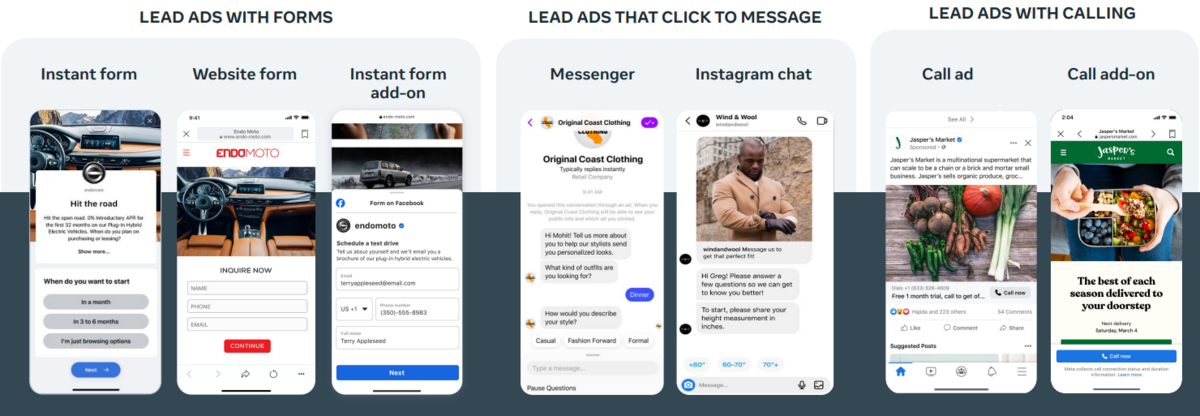
Lead Ads focus on collecting contact details directly within Facebook. Forms open inside the app, which removes friction and shortens the journey from interest to submission. Among conversion-led types of Facebook ads, Lead Ads support steady enquiry flow.
They suit businesses that rely on follow-ups, consultations, or relationship-based sales.
Where they appear
- Facebook feed and Stories
- Instagram feed and Stories
- Facebook Messenger
- Audience Network
How businesses use them
- Capture B2B enquiries
- Collect sign-ups for newsletters or events
- Generate leads for real estate, finance, or coaching
- Book consultations without website redirects
Dynamic Ads
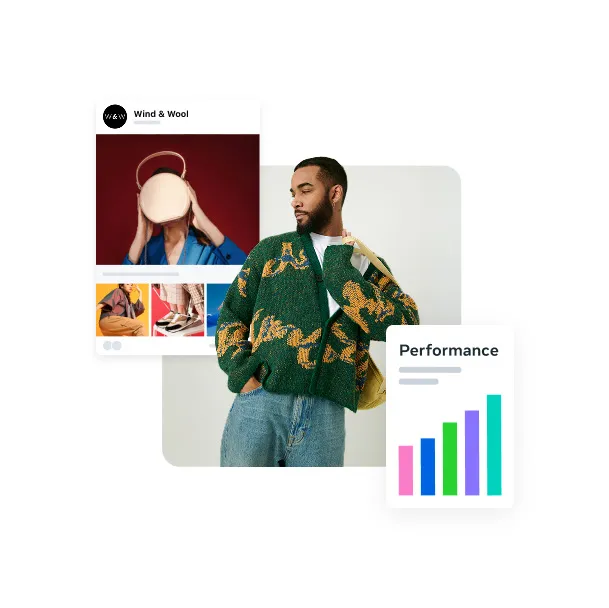
Dynamic Ads display products based on user behaviour. The system selects items from a catalogue and matches them with users who have shown interest earlier. This Facebook Ad Type supports personal relevance at scale.
These ads reduce manual work while keeping messaging aligned with user intent.
Where they appear
- Facebook and Instagram feeds
- Stories
- Messenger
- Audience Network
How businesses use them
- Retarget users who viewed or added products
- Show listings in travel or property platforms
- Present personalised recommendations
- Maintain visibility across multiple sessions
Stories Ads
Stories Ads appear between user stories in a vertical, full-screen format. They match natural viewing behaviour and work well for short, visual messages when brands create social media video ads designed for mobile consumption.
Among mobile-first Types of Ads in Facebook, Stories Ads fit fast-paced campaigns.
Where they appear
- Facebook Stories
- Messenger Stories
- Instagram Stories
How businesses use them
- Promote short-term offers
- Share teasers or previews
- Announce launches
- Maintain brand visibility in daily viewing habits
Messenger Ads
Messenger Ads invite users into conversations. Instead of sending traffic to a page, these ads open chats where questions, bookings, or requests happen in real time. This Facebook Ad Type suits intent-led interaction.
Where they appear
- Messenger home tab
- Sponsored messages inside chats
- Click-to-Messenger feed ads
How businesses use them
- Schedule appointments
- Qualify leads through chat flows
- Answer product questions
- Support remarketing campaigns
Offer Ads
Offer Ads promote time-bound discounts that users can save and receive reminders for. These ads suit urgency-led campaigns where timing matters.
Where they appear
- Facebook feed
- Desktop right column
- Marketplace
- Selected Instagram placements
How businesses use them
- Festival sales
- Flash discounts
- Store promotions
- Clearance campaigns
Event Ads
Event Ads promote online or offline events hosted on Facebook. They focus on awareness, interest, and responses within the platform.
Where they appear
- Facebook feed
- Event discovery areas
- Suggested event placements
How businesses use them
- Promote webinars or workshops
- Announce product launches
- Drive attendance for local events
Playable Ads
Playable Ads allow users to interact with an app or feature before installing it. This Facebook Ad Type suits products that benefit from trial-style engagement.
Where they appear
- Facebook and Instagram mobile feed
- Audience Network
- In-app placements
How businesses use them
- Promote mobile games
- Encourage app installs
- Present interactive product features
AR Ads (Augmented Reality Ads)
AR Ads let users interact with products through their phone camera. These ads support visual trial within Facebook and Instagram.
Where they appear
- Facebook and Instagram feeds
- Stories
- Reels
- Camera effects
How businesses use them
- Beauty and fashion try-ons
- Product previews
- Engagement-led launches
Quick Comparison Table - Facebook Ad Types
With so many types of Facebook ads available, choosing the right format often depends on the goal behind the campaign. Each Facebook Ad Type serves a different purpose.
Some bring attention, some collect leads, and others drive purchases or conversations. When brands match their objective with the right types of fb ads, campaigns tend to perform with more consistency.
The table below gives a simple reference for the most common types of ads in Facebook and the goals they support. Use it as a starting point when shaping a practical Facebook ads idea for your business.
| Goal | Recommended Facebook Ad Type | Where It Works Best | Ideal For |
| Brand awareness | Video Ads, Stories Ads, Instant Experience Ads | Feeds, Stories, mobile placements | New product launches, brand introductions |
| Lead generation | Lead Ads, Messenger Ads | Feeds, Stories, Messenger | Service businesses, B2B, consultations |
| Website traffic | Image Ads, Video Ads, Carousel Ads | Feeds and Stories | Blogs, landing pages, product pages |
| Product sales | Dynamic Ads, Collection Ads, Offer Ads | Feeds, Marketplace, Stories | E-commerce stores, seasonal sales |
| App installs | Playable Ads, App Install Ads | Mobile feeds, Audience Network | Mobile apps and games |
| Event promotion | Event Ads, Video Ads | Feeds, event discovery areas | Webinars, launches, workshops |
| Customer engagement | Messenger Ads, Stories Ads, AR Ads | Messenger, Stories, Reels | Interactive campaigns, product trials |
11 Top Tips for Your Facebook Ads
Real performance comes from how those ads are planned, written, and tested. Many brands run the right Facebook Ad Type but still see weak outcomes because the message, offer, or targeting lacks clarity.
The tips below apply across all types of fb ads. These practices help shape stronger types of Facebook advertising and a more practical execution.
1. Start with Research and Inspiration
Before launching any campaign, spend time collecting ideas and studying what others are doing. A short brainstorming session often separates a strong campaign from one that feels random.
When teams pause to research:
- They notice how competitors present offers.
- They gather creative direction from other industries.
- They shape a message that reflects their own brand voice.
Useful places for inspiration:
- Facebook Ad Library
- Curated collections of ad examples
- Competitor pages and promoted posts
2. Narrow Your Audience and Write for One Person
Facebook allows precise targeting. Facebook allows precise targeting, especially when supported by a Facebook Ads Audience Builder that identifies high-intent interest groups. This gives advertisers the chance to speak directly to a specific type of customer instead of addressing a broad group.
For example:
- Target women above 30 interested in fitness
- Target startup founders in metro cities
- Target parents looking for after-school programmes
When you define the audience clearly:
- The copy becomes more personal
- The offer feels more relevant
- The selected Facebook Ad Type performs better
3. Create Separate Ads for Different Segments
Customers approach a brand with different intentions. One message rarely suits everyone. Facebook gives enough targeting options to build multiple ads for different segments. For example, a clothing retailer can run:
- One ad for men’s wear
- One ad for women’s activewear
- One ad for accessories
- One ad for seasonal collections
4. Test Variations with Patience
A/B testing helps identify what actually works. Many advertisers check results too early and stop campaigns before enough data comes in. For better testing:
- Create multiple versions of headlines, visuals, or CTAs
- Let each variation collect enough impressions
- Compare results after a fair testing period
5. Keep Headlines Short and Clear
Most users scan ads quickly. Long headlines often get ignored. Short and direct headlines created with an AI ad copywriter capture attention faster and improve engagement rates. Good headline habits:
- Keep the length around 25 to 40 characters
- Focus on one clear benefit
- Avoid cluttered phrasing
6. Present a Strong Value Offer
A compelling offer gives users a reason to click. When the benefit feels clear, engagement often rises. Strong value offers can include:
- Free consultations
- Limited-time discounts
- Exclusive guides or tools
- Early access to new products
7. Add Urgency to the Message
People often delay decisions when there is no time pressure. A clear deadline pushes action. Ways to create urgency:
- Countdown timers
- Limited stock notices
- Festival or seasonal deadlines
- Flash sales
8. Use Rewards to Encourage Action
Some users need a small push before committing. A prize or reward can provide that extra motivation. Examples:
- Gift cards for survey participation
- Free samples for sign-ups
- Contest entries for first-time buyers
9. Use Curiosity-Based Hooks
Curiosity encourages clicks. When users sense an information gap, they feel drawn to fill it. This approach works well for:
- Blog promotions
- Ebook downloads
- Educational content
- Case study ads
A simple structure:
- Start with an interesting problem
- Hint at the solution
- Reveal the full answer after the click
10. Use Strong Action Words
Certain words encourage action. They create momentum in ad copy and guide the reader toward the next step. Examples of effective action words:
- Now
- New
- Offer
- Easy
- Quick
- Save
- Limited
- Start
11. Build Trust with Social Proof
People often hesitate when they see a new brand. Social proof helps remove doubt. Forms of social proof include:
- Customer testimonials
- Ratings and reviews
- Comment threads on ads
- Shares and reactions
You can also use dark posts to collect engagement and reuse that proof in other campaigns. This builds credibility across multiple types of ads on Facebook.
How GrowEasy Helps Businesses Run Better Facebook Ads
Many businesses understand the different types of Facebook ads, yet performance still feels unpredictable. This usually happens when campaigns rely on manual setup and scattered data across tools.
GrowEasy addresses this gap through its AI Ads Manager, which helps businesses manage and optimise multiple Facebook ad types from one platform. The platform helps businesses manage different types of fb ads from one place, with automation that reduces guesswork and improves consistency across campaigns.
AI-Powered Features That Support Better Ad Performance
GrowEasy’s AI Ads Manager uses automation and machine learning to manage campaigns across platforms. It supports Facebook advertising from a single interface, which helps businesses run their types of Facebook ads with more consistency.
Core capabilities include:
- Automated campaign creation
The system builds campaign structures, budgets, and creative suggestions automatically. - Intelligent audience targeting
Machine learning identifies high-intent audience segments. - Automated bid management
Real-time adjustments aim to lower acquisition costs. - Live performance tracking
A unified dashboard displays campaign data and alerts. - Marketing tool connections
Integrations link ad platforms with CRM and analytics systems. - Multi-channel campaign control
Businesses manage Meta Ads, Google Ads, and WhatsApp campaigns together.
Results Businesses Often See After Automation
Companies using AI-powered campaign management report measurable improvements across their types of Facebook advertising.
Typical outcomes include:
- Around a 40 per cent increase in return on ad spend within 45 days.
- About a 25 per cent reduction in wasted ad spend through better targeting.
- Up to 10 hours saved each week through automation.
One Dashboard for All Your Facebook Ad Types
GrowEasy brings campaign data, audience insights, budget tracking, and AI recommendations into a single dashboard. Instead of switching between tools, teams manage all Types of Ads in Facebook from one view.
With this setup:
- Campaign performance becomes easier to read.
- Budget allocation stays clear.
- Lead tracking remains consistent.
- Adjustments happen faster.
Common Mistakes Businesses Make With AI Marketing
AI tools are now part of everyday marketing conversations. Many companies adopt them with high expectations, yet results often fall short. The gap usually comes from how AI gets used, not from the technology itself. When businesses treat AI as a shortcut rather than a guided system, campaigns lose direction.
Below are the most common pitfalls businesses face while using AI in their Facebook advertising.
1 Treating AI as a Ready-to-Use Tool
Many teams assume AI tools will perform well from the moment they are installed. In reality, AI needs structured data, clear objectives, and proper integration before it can deliver strong results.
When companies chase trends without clear use cases, the tools end up running without direction. Better starting points include:
- Automating customer retention campaigns.
- Using AI tools for lead generation.
- Building persona insights through AI analysis.
2 Ignoring Human Review
AI can generate copy, visuals, and targeting suggestions. Without human review, campaigns often sound mechanical or inconsistent with brand voice. Common issues include:
- Robotic or repetitive messaging.
- Factual errors in copy.
- Visual styles that do not match brand identity.
3 Expecting Immediate Returns
AI systems learn over time. Many businesses expect instant revenue increases and stop campaigns too early when results take time to stabilise. What actually happens:
- AI tests different audiences and creatives.
- Performance fluctuates during the learning phase.
- Results become more stable after sufficient data is collected.
4 Running AI in Isolated Departments
Some companies use AI only within marketing, while sales and customer service teams continue using separate systems. This breaks the flow of insights across the organisation. When AI works across teams:
- Lead quality improves.
- Follow-ups become faster.
- Customer conversations inform future campaigns.
5 Ignoring Privacy and Ethical Concerns
AI relies on customer data. When companies ignore privacy laws or data handling practices, trust erodes quickly. Risks include:
- Data misuse complaints.
- Compliance penalties.
- Loss of customer confidence.
6 Over-Automation Without Clear Strategy
Automation works best when guided by a clear plan. Some businesses add AI tools without defining goals, audiences, or campaign structure. This often leads to:
- Disconnected campaigns
- Mixed messaging across platforms
- Poor allocation of budgets
Closing Thoughts
The types of Facebook ads available in 2026 give businesses more control than ever before. Each Facebook Ad Type serves a clear purpose, whether the goal is awareness, leads, or sales.
When brands choose the right type of fb ads for each stage of the funnel, campaigns tend to perform with more stability.
With the right strategy and tools, the many ads in Facebook become practical instruments for steady results.
FAQs
What are the different types of audiences in Facebook ads?
Facebook offers three main audience categories across its types of Facebook ads:
- Core audiences: Built using demographics, interests, behaviours, and location.
- Custom audiences: Created from existing contacts, website visitors, app users, or engagement data.
- Lookalike audiences: New audiences modelled on existing customers or high-value users.
What are the 5 types of advertising media?
Across marketing, the five common advertising media categories are:
- Digital advertising, such as social media, search, and display ads.
- Print advertising, including newspapers and magazines.
- Broadcast advertising on television and radio.
- Outdoor advertising, such as billboards and transit ads.
- Direct advertising, including email and physical mail.
Are Facebook ads CPC or CPM?
Facebook ads support both CPC and CPM pricing models across different Facebook ads.
- CPC (cost per click): You pay when someone clicks on your ad.
- CPM (cost per thousand impressions): You pay for every thousand times your ad is shown.
The billing method depends on the campaign objective and the Facebook Ad Type you select. Some types of ads on Facebook focus on clicks, while others prioritise impressions or conversions.
Easy and fast setup
Marketing Doesn't Have to Be Hard. Let AI Do the Work.
Start getting leads in 5 minutes – no marketing team needed.
Start Now