
Summary:
A lead funnel is a structured system guiding potential customers from initial interest to purchase, while lead statuses track each lead's progress within this funnel. Together, they form the backbone of an effective sales process by helping businesses focus on the right prospects and personalize follow-ups. Understanding and implementing these concepts can significantly enhance lead conversion and sales efficiency.
Table of Contents
What Is a Lead Funnel and Lead Statuses? A Complete Guide for 2026
Lifecycle Stages of a Lead Explained
Stage 1: Awareness (Top of Funnel)
Stage 2: Interest and Consideration (Middle of Funnel)
Stage 3: Evaluation and Decision (Late Funnel)
Stage 4: Action and Conversion (Bottom of Funnel)
Lead Statuses vs Lifecycle Stages
The Core Lead Statuses Explained
How the Lead Funnel and Lead Statuses Work Together
What Is a Lead Funnel and Lead Statuses? A Complete Guide for 2026
You are running ads, getting enquiries, but most of them disappear. The problem usually is not your product. It is the absence of a structured system to guide a person from "just browsing" to "ready to buy." That system is called the lead funnel, and the way you track every lead inside it is through lead statuses. Together, they are the backbone of any sales process that actually works. This guide explains both in plain language with real examples.
What Is a Lead in Marketing?
A lead is anyone who has shown interest in your product or service through actions like clicking your ad, filling out a form, sending a WhatsApp message, or visiting your website more than once. Not yet a customer, but not a stranger either. Our guide on lead generation meaning, process, and strategies covers how leads are generated in the first place.
What Is a Lead Funnel?
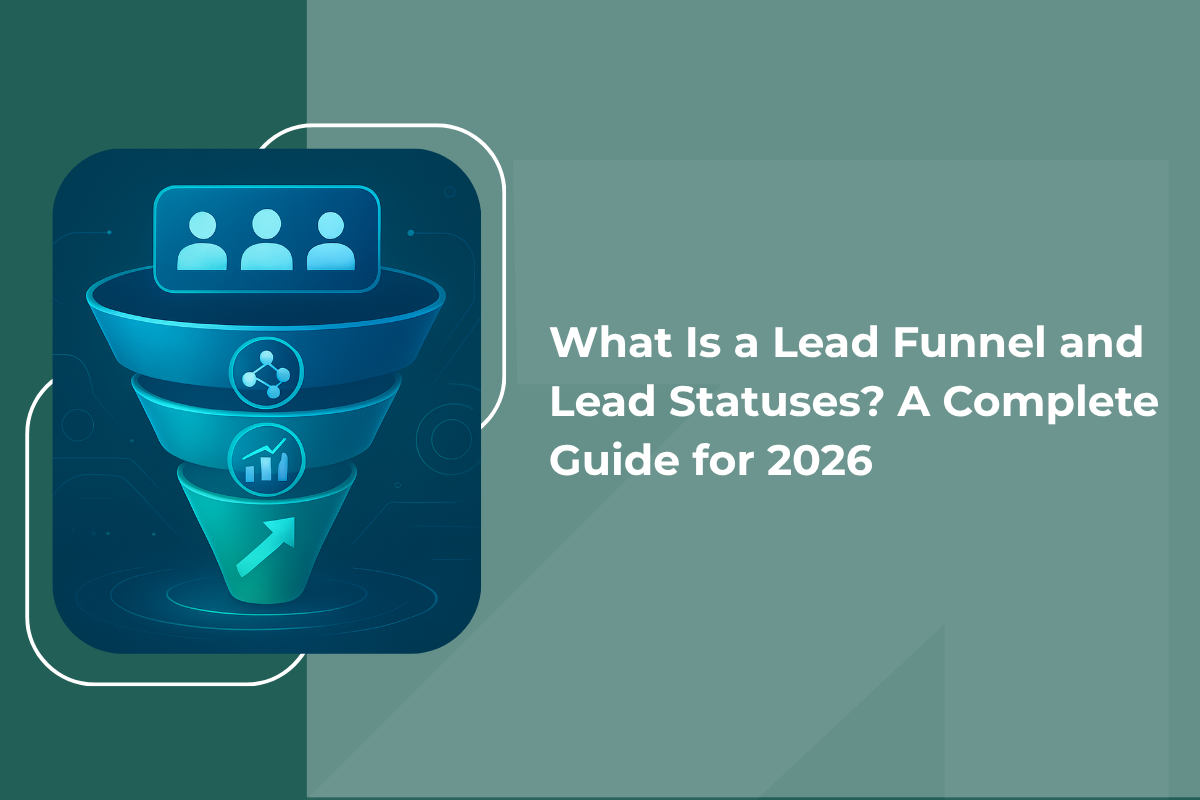
A lead funnel, also called a lead generation funnel, is a step-by-step system that maps a potential customer's journey from the moment they first hear about you to the moment they buy from you. Hundreds of people may see your ad, but only a fraction will enquire, and only some of those will become customers. The funnel represents that natural filtering process. Its job is to attract people, capture their details, and qualify their interest so your team focuses on the right people.
What Is a Marketing Funnel?
The marketing funnel is the bigger picture. It covers the full journey a person takes from first discovering your brand to becoming a loyal, repeat customer. The lead funnel sits inside it at the early stages. A well-built marketing funnel filters out unlikely buyers, delivers the right information at the right time, and builds trust so prospects are already half-convinced before they speak to sales.
Lifecycle Stages of a Lead Explained
Every lead passes through four key stages in the funnel. Knowing these helps you deliver the right content and take the right action at each step.
Stage 1: Awareness (Top of Funnel)
A person sees your ad, reads a blog post, or hears about you from a friend. They have a problem and are just starting to look for a solution. Your goal is to get noticed with broad, helpful content. GrowEasy's AI Ad Copywriter and Facebook Ads Audience Builder help you reach exactly the right people at this stage without wasting budget.
Stage 2: Interest and Consideration (Middle of Funnel)
The lead knows who you are and is comparing you with competitors. Trust gets built here through free guides, case studies, and follow-up emails. This is also where Marketing Qualified Leads (MQLs) appear: leads who have engaged meaningfully with your content but are not yet ready to speak to sales.
Stage 3: Evaluation and Decision (Late Funnel)
The lead is comparing your pricing, reading reviews, and deciding if you are worth the investment. Personalised follow-ups, product demos, and testimonials make a big difference here. Sales Qualified Leads (SQLs) live at this stage: leads your sales team has confirmed as genuine buyers ready for a real conversation.
Stage 4: Action and Conversion (Bottom of Funnel)
The lead becomes a customer. Make the process as smooth as possible with clear calls to action, quick responses, and easy payment options. Post-purchase follow-ups and loyalty touchpoints then turn a one-time buyer into a repeat customer who refers others.
Types of Marketing Leads
Not every lead is the same. Treating them all the same way is a common and costly mistake. Here is a quick breakdown:
Cold Leads match your target audience but have never interacted with your brand. They need awareness-stage content before any pitch.
Warm Leads have engaged in some way: opened your emails, visited your website, or followed you on social media.
Hot Leads are actively looking to buy. They have shown strong intent and need just the right nudge.
MQLs (Marketing Qualified Leads) have engaged enough with your content to be worth nurturing further and are handed to sales with context.
SQLs (Sales Qualified Leads) have been confirmed by the sales team as ready to buy and are in active conversations or have requested a demo.
Knowing which type you are dealing with helps you send the right message at the right time.
What Are Lead Statuses?
You now understand the funnel and the types of leads. But here is where many businesses fall short: they generate leads but do not track them properly. That is where lead statuses come in.
A lead status is a label you assign to each lead in your CRM. It tells your team where things stand with that lead right now and what the next action should be. Many teams now automate this first response step, see how an AI agent qualifies leads automatically before a status even changes. Think of it as your pipeline's live scoreboard. The lifecycle stage tells you where the lead is in their buying journey. The lead status tells you what your team is currently doing about it.
Lead Statuses vs Lifecycle Stages
Lifecycle stages answer: "Where is this lead in their decision process?" Examples: Subscriber, Lead, MQL, SQL, Opportunity, Customer.
Lead statuses answer: "What does my team do next?" Two leads can be in the same lifecycle stage but have completely different statuses. One might be "Contacted" and the other "Standby." That single difference tells your sales rep to follow up with one and keep nurturing the other. Without statuses, both get the same generic treatment, which rarely works.
The Core Lead Statuses Explained
Here are the standard lead statuses used across CRM platforms and sales teams in 2026:
New (To Do): A fresh lead has arrived and no one has responded yet. Responding within the first few minutes makes a significant difference to conversion rates.
Contacted: Your team has reached out by call, email, or WhatsApp and is waiting for a reply or has had a brief conversation.
Standby (Nurturing): The lead is not ready right now but has not been lost. They go into a nurturing sequence so they are never forgotten.
Won: The lead has become a paying customer.
Lost: The lead chose a competitor or went cold. Marking it honestly helps you improve your funnel over time.
Cancelled: The deal fell through due to factors outside the normal sales process, such as a budget change.
Getting statuses right is what separates a clean, productive pipeline from one where leads disappear every week.
How the Lead Funnel and Lead Statuses Work Together
The funnel tells you where a lead is in their buying journey. The status tells you what your team is doing about it right now. Together they give you a real-time picture of your entire pipeline.
Here is a real example. A real estate business uses Facebook ads to generate enquiries. A lead downloads a brochure: stage is Awareness, status is New. The team calls them the same day: stage moves to Interest, status becomes Contacted. The lead asks for a site visit: stage is Evaluation, status is To Do. They confirm a booking: stage is Conversion, status is Won. Every step is tracked, every action is clear, nothing slips through.
Once a lead moves to 'Contacted,' the next operational question is who handles it, our guide to automatically assigning leads to the right salesperson covers that step.
GrowEasy's B2B lead generation solutions and AI-powered lead generation tools are built to help you run this kind of structured pipeline at scale.
Tips to Get More Out of Your Lead Funnel in 2026
Respond fast. The faster you respond to a new lead, the higher your conversion chances. Aim to reply within five minutes of every new enquiry.
Stop treating all leads the same. Use statuses and lead types to personalise follow-ups. A cold lead needs a very different message than a hot lead.
Automate Standby follow-ups. Most leads do not convert on the first contact. GrowEasy's WhatsApp marketing automation keeps nurturing Standby leads automatically so none are ever forgotten. If you're deciding how much of this to automate versus handle by hand, our comparison of manual vs automated lead management breaks down where each approach wins.
Know your cost per lead. Use GrowEasy's Lead Cost Calculator to understand what each lead costs you at each funnel stage and where to invest more.
Review your funnel data regularly. Losing leads between Stage 2 and Stage 3 means your mid-funnel content needs work. Drop-offs just before conversion point to a closing problem. The data tells you exactly what to fix.
Final Thoughts
The lead funnel and lead statuses do not require expensive software or a large team. What they require is clarity: knowing where your leads come from, where they go, and what needs to happen at every step.
Start simple. Map your funnel stages. Define your lead statuses. Track every enquiry consistently. Then refine from there. ExploreGrowEasy's lead generation resources for guides, tools, and strategies built to help businesses generate better leads and close more deals in 2026.
Easy and fast setup
Marketing Doesn't Have to Be Hard. Let AI Do the Work.
Start getting leads in 5 minutes – no marketing team needed.
Start Now