Summary:
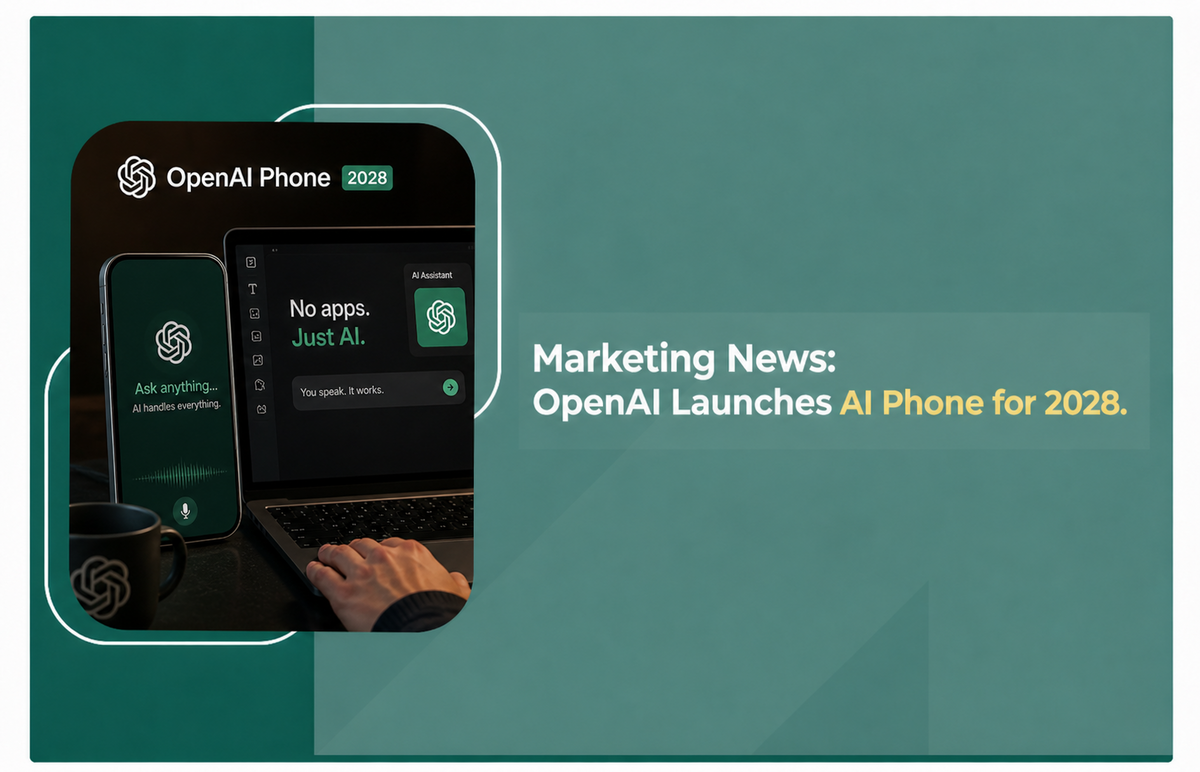
OpenAI is developing an AI-first smartphone that aims to replace traditional apps with intelligent AI agents, potentially transforming mobile computing by 2028. Collaborating with chipmakers like Qualcomm and MediaTek, and involving designer Jony Ive, the device will feature a fully AI-driven interface, hybrid AI architecture, and context-aware intelligence. This innovation could redefine AI marketing, challenge existing ecosystems, and shift developers towards AI-compatible services, marking a new era in computing.
Table of Contents
OpenAI’s AI Smartphone Could Redefine the Future of Mobile Computing
In a move that could reshape the entire tech ecosystem, OpenAI is reportedly developing an AI-first smartphone designed to eliminate traditional apps and replace them with intelligent AI agents.
With a projected launch timeline around 2028, this device is not just another smartphone. It signals a fundamental shift in how humans interact with technology.
What Happened
According to industry analyst insights, OpenAI is collaborating with major chipmakers like Qualcomm and MediaTek, along with manufacturing partner Luxshare, to build a custom AI-powered smartphone.
The goal is clear:
Move beyond app-based ecosystems and create a fully AI-driven interface.
Additionally, legendary Apple designer Jony Ive is reportedly involved, adding credibility to the company’s hardware ambitions.
Key Features and Vision
1. AI Agents Replace Apps
Instead of opening multiple apps, users will simply give commands.
The AI agent executes tasks across services seamlessly.
2. Hybrid AI Architecture
The device will combine:
- On-device AI models for real-time responsiveness
- Cloud-based AI for complex processing
This ensures efficiency, speed, and personalization.
3. Context-Aware Intelligence
The smartphone will continuously understand:
- User behavior
- Location
- Preferences
- Daily routines
This enables highly personalized automation.
4. Custom AI Processors
With Qualcomm and MediaTek, OpenAI is designing chips optimized for:
- Memory efficiency
- Real-time inference
- Power optimization
Why It Matters for AI Marketing and AI Ads
This shift could redefine AI marketing and AI ads entirely.
If users stop using apps:
• Traditional ad placements may disappear
• AI-driven recommendations will dominate
• Personalization will reach unprecedented levels
For performance marketing, this means:
- Hyper-targeted campaigns
- Real-time intent-based advertising
- AI-managed funnels replacing manual optimization
It also accelerates the role of:
- AI video generation
- AI image generation
- Automated creative testing
Industry Impact
Apple and Android Ecosystems
This poses a long-term challenge to existing ecosystems built around apps.
While it won’t disrupt immediately, it introduces a new interaction model:
AI-first vs App-first.
Chipmakers and Supply Chain
Companies like Qualcomm, MediaTek, and Luxshare stand to benefit from a new hardware cycle driven by AI smartphones.
Developers and Businesses
Developers may need to shift from building apps to building AI-compatible services.
Future Implications
If successful, OpenAI’s smartphone could:
- Replace apps with AI workflows
- Redefine user interfaces
- Create a new AI-native ecosystem
- Shift control from platforms to AI layers
This is not just a product launch.
It’s the beginning of a new computing paradigm.
Where GrowEasy Fits In
AI is the brain
GrowEasy is the execution engine
As AI tools generate ideas, campaigns, and strategies, GrowEasy turns them into real business outcomes.
GrowEasy helps brands:
• Execute AI-generated campaigns
• Automate Google Ads and Meta Ads
• Optimize AI performance marketing funnels
• Scale content including ads, blogs, and creatives
In a world where AI agents run decisions, GrowEasy ensures those decisions turn into measurable growth.