
Summary:
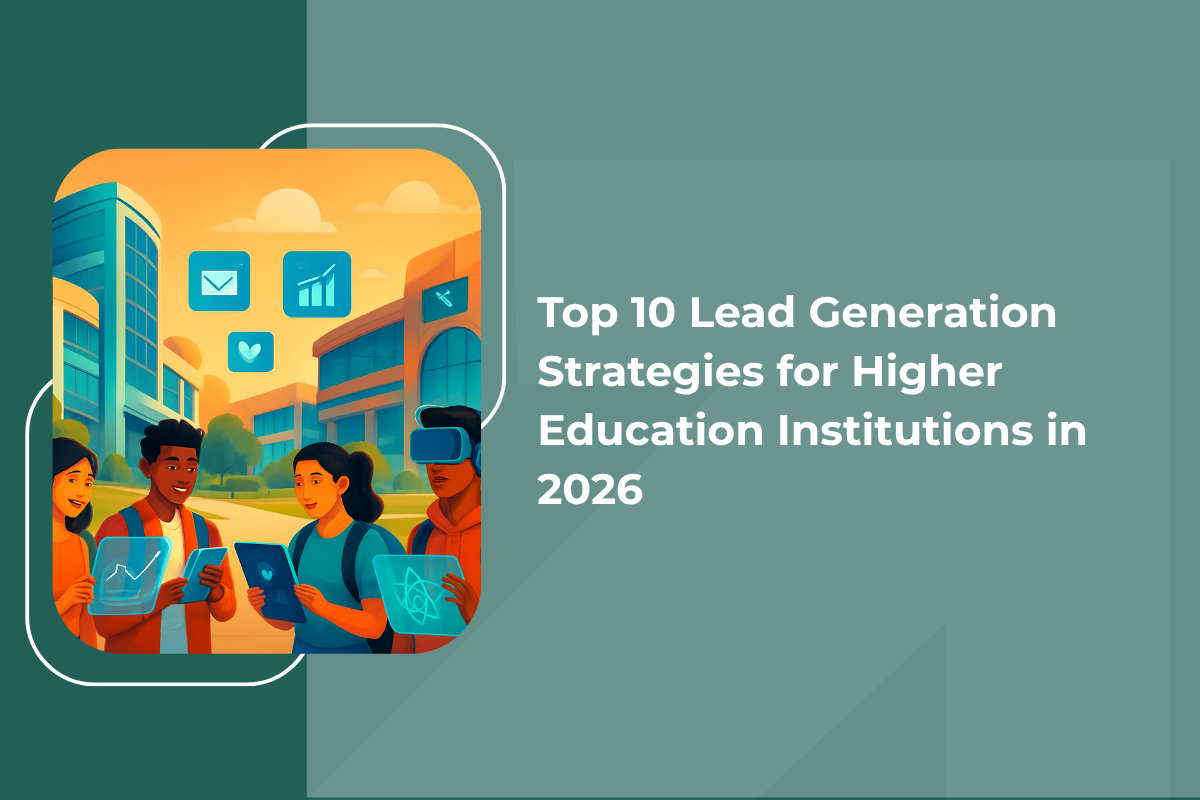
Higher education institutions often struggle to convert inquiries into enrollments due to a focus on lead volume over quality. Effective lead generation requires attracting genuinely interested students and nurturing them through a comprehensive, multichannel strategy. This involves optimizing content for search queries, enhancing website conversion rates, leveraging social media, personalizing email campaigns, and utilizing CRM systems for data-driven decision-making. Institutions that integrate these elements see significant improvements in enrollment outcomes.
Table of Contents
The Hidden Lead Generation Problem Most Universities Can't See
1. Stop Broadcasting, Start Attracting: Content and SEO That Earns the Click
“Write for the Questions Students Are Already Googling”
2. Your Website Is Your Best Recruiter: Are You Using It Wisely?
“Optimize Every Page Like It's a Conversion Machine”
3. Go Where Gen Z Lives: Social Media Lead Generation That Moves the Needle
4. The Follow-Up Is Where Enrollment Is Won: Email Nurturing Done Right
5. Events Are Not Dead: They Are Your Secret Weapon
“Virtual, Hybrid, and In-Person: Each Has Its Place”
6. Pay to Win: But Only If You Are Targeting the Right Intent
“Paid Search, Social Ads and Chatbots: Where Budget Meets Precision”
7. What Gets Measured Gets Enrolled: CRM and Data Analytics
“Connect Every Channel to the Outcome That Matters”
The Institutions Winning at Lead Generation Have One Thing in Common
7 Lead Generation Strategies for Higher Education Institutions: The 2026 Playbook for Enrollment Ready Leads
Every year, thousands of higher education institutions run campaigns across paid search, social media, and email, yet many still struggle to meet their enrollment targets. Why? Because getting more inquiries is easy. Getting the right inquiries, ones that actually convert into enrolled students, is an entirely different challenge.
Lead generation in higher education is no longer just about filling the top of the funnel. It is about attracting genuinely interested students, nurturing them through a long decision journey, and converting that interest into enrollment. This guide walks you through seven proven strategies to do exactly that.
The Hidden Lead Generation Problem Most Universities Can't See
Most institutions confuse lead volume with lead quality. To improve, define clear metrics for high-intent inquiries, such as engagement levels or application readiness, ensuring your efforts target prospects most likely to enroll.
The fix is not more leads. It is a smarter multichannel strategy that attracts the right students at the right stage. Understanding your cost per lead across channels is the clearest first step to knowing where your budget is actually working.
1. Stop Broadcasting, Start Attracting: Content and SEO That Earns the Click
“Write for the Questions Students Are Already Googling”
Prospective students search for answers to their questions, like "How long is an MBA program?" or "What GPA do I need for nursing school?" Addressing these shows you understand their concerns, making them feel understood and supported.
Build blog posts, program guides, and FAQs for high-intent search queries. Use a tool like GrowEasy's Google Keyword Ideas Generator to discover exactly what your prospective students are searching for, then create content that directly answers those questions on dedicated program pages.
The results can be substantial. When Cumberland College invested in a keyword-driven, multilingual SEO strategy with a digital marketing partner, organic traffic grew by 27.5%, and leads from SEO surged by 386%, contributing to a 20 to 35% increase in new enrollments.
Gated resources, such as scholarship checklists, career outcome guides, and campus brochures, add a layer of lead capture. Students readily share their contact details in exchange for content that genuinely helps them choose.
2. Your Website Is Your Best Recruiter: Are You Using It Wisely?
“Optimize Every Page Like It's a Conversion Machine”
Driving traffic to your website is only half the job. The other half is converting visitors into inquiries. Education landing pages average a 4.5% conversion rate, which means even small design and copy improvements can meaningfully boost student inquiries.
Here is what consistently works:
- Mobile-first design: Most students browse on phones. Pages must load fast and display cleanly on small screens.
- Short, focused forms: Ask only for the essentials: name, email, and program interest. Every extra field reduces completion.
- Clear CTAs: Buttons like "Download Brochure," "Chat with a Student," or "Apply Now" outperform generic "Contact Us" links.
Trust signals like accreditation badges, alum career outcomes, and student testimonials help students feel reassured and valued, easing their decision-making process. Critically, every landing page must match the intent of the ad or search that brought the student there. A mismatch between search intent and landing page content is one of the biggest conversion killers in higher education.
3. Go Where Gen Z Lives: Social Media Lead Generation That Moves the Needle
Platform by platform, combine social media efforts with email and website strategies to create a seamless experience. For example, use Instagram Stories to promote webinars and follow up with targeted email sequences to maximize engagement and lead conversion. According to Full Fabric, 50% of Gen Z and 42% of millennials say social media is the most relevant channel for ads. But not every platform serves the same audience:
- Instagram and TikTok work best for undergraduate recruitment. "Day in the life" videos, student ambassador takeovers, and campus reels build authentic connections and drive organic reach.
- LinkedIn is the strongest channel for postgraduate and executive education. Queen's School of Business in Ontario, for example, generated over 450 new Executive MBA leads by combining Sponsored Updates and InMail.
- Facebook remains highly effective for reaching parents and adult learners, particularly through Lead Ads that let prospective students submit their details without leaving the platform, reducing friction and improving conversion rates.
For a deeper breakdown of running paid social campaigns effectively, GrowEasy's guide on social media lead generation is a practical starting point.
4. The Follow-Up Is Where Enrollment Is Won: Email Nurturing Done Right
Segment, personalize, and convert-tailored email nurturing makes students feel recognized and respected, increasing their trust and engagement. Email marketing delivers an estimated $36 in return for every $1 spent in higher education, and nearly 70% of students prefer to hear from institutions via email.
Generic email blasts, however, do not work. Segmentation is the critical variable. Build separate nurture sequences for distinct student personas:
- Traditional undergraduates: campus life, application deadlines, peer community
- Adult and vocational learners: flexible scheduling, employer reimbursement, career outcomes
- Graduate prospects: alum networks, faculty expertise, degree ROI
When McMaster University's Continuing Education department adopted persona-driven email automation, their drip campaigns achieved a 27.9% open rate, well above the education industry average of approximately 21.5%.
Trigger emails based on student actions and milestones, rather than just calendar dates, to achieve results that consistently outperform broadcast campaigns.
5. Events Are Not Dead: They Are Your Secret Weapon
“Virtual, Hybrid, and In-Person: Each Has Its Place”
Events let prospective students experience your institution directly. This is something no landing page can fully replicate. Open days, campus tours, and information sessions build the emotional connection that moves students from considering to committing.
Virtual events have dramatically expanded this reach. A survey of UK prospective students found that 59% attended at least one virtual open day.
Peer-to-peer engagement at events can significantly boost results. For example, when the NYU Tandon School of Engineering used trained student ambassadors to chat with admitted students, 39% of those who interacted enrolled, compared to just 21% who didn’t. This means students who engaged were about 85% more likely to enroll.
Every event, whether virtual or in person, should be followed up within 24 hours with a personalized email, a relevant resource, and a clear next step to sustain momentum.
6. Pay to Win: But Only If You Are Targeting the Right Intent
“Paid Search, Social Ads and Chatbots: Where Budget Meets Precision”
Paid channels fall into two distinct buckets, and blurring the line between them is expensive.
Intent-based channels, such as Google Search Ads, capture students who are actively searching for specific programs. These clicks cost more but convert at higher rates because the student is already in decision mode. Use GrowEasy's Facebook Ads Audience Builder to build precise, segmented audiences for your awareness stage campaigns on Meta platforms.
Awareness-based channels such as Instagram, TikTok, and Facebook reach students who are not yet searching. The path from ad impression to application is longer and requires a structured nurture sequence in between.
Chatbots bridge both worlds. Modern education chatbots provide instant answers to FAQs around the clock, handle common admissions queries, and free your team for complex conversations. Explore GrowEasy's in-depth guide to chatbots for capturing leads and learn how to deploy them effectively.
7. What Gets Measured Gets Enrolled: CRM and Data Analytics
“Connect Every Channel to the Outcome That Matters”
A CRM is the backbone of every successful higher education lead generation program. Every inquiry, event registration, and ad click should flow into a central system where it can be tracked, scored, and followed up on in a structured sequence.
The critical step most institutions skip is mapping ad platform data back to CRM milestones such as inquiry, application, and deposit. Without this link, budget decisions get made on inquiry counts rather than actual enrollment outcomes. Use GrowEasy's Lead Cost Calculator to benchmark your current cost per lead and identify which channels are genuinely delivering enrollments.
For colleges running lead generation in India, listing your institution on high-intent portals such as Shiksha.com, CollegeSearch.in, and Careers360 creates additional trackable lead sources that feed directly into your CRM pipeline.
The Institutions Winning at Lead Generation Have One Thing in Common
They do not rely on one channel. They build interconnected systems where content drives SEO, SEO sends traffic to optimized pages, social media and paid ads amplify reach. Email workflows nurture every lead until they are ready to apply.
Real-world results back this up. Webster University Geneva reported a 30% surge in enrollments through a combination of digital marketing and timely, personalized follow-ups.
Start by auditing your current strategy: which channels are producing enrolled students, not just inquiries? Then build from what is working.
If you are ready to put a consistent, measurable lead generation engine in place, explore how GrowEasy's higher education lead generation solutions can help your institution attract the right students at the right time.
Easy and fast setup
Marketing Doesn't Have to Be Hard. Let AI Do the Work.
Start getting leads in 5 minutes – no marketing team needed.
Start Now