
Summary:
WhatsApp marketing campaigns are highly effective due to their exceptional open and click-through rates, immediacy, and personal nature. With 2.78 billion active users, WhatsApp offers businesses a unique opportunity to engage customers through personalized, timely messages that feel like conversations rather than advertisements. Successful campaigns leverage segmentation, personalization, and automation to maximize engagement and conversion, with examples ranging from flash sales to customer feedback loops. Tools like GrowEasy facilitate these campaigns by providing AI-driven solutions for small and medium businesses to execute at scale.
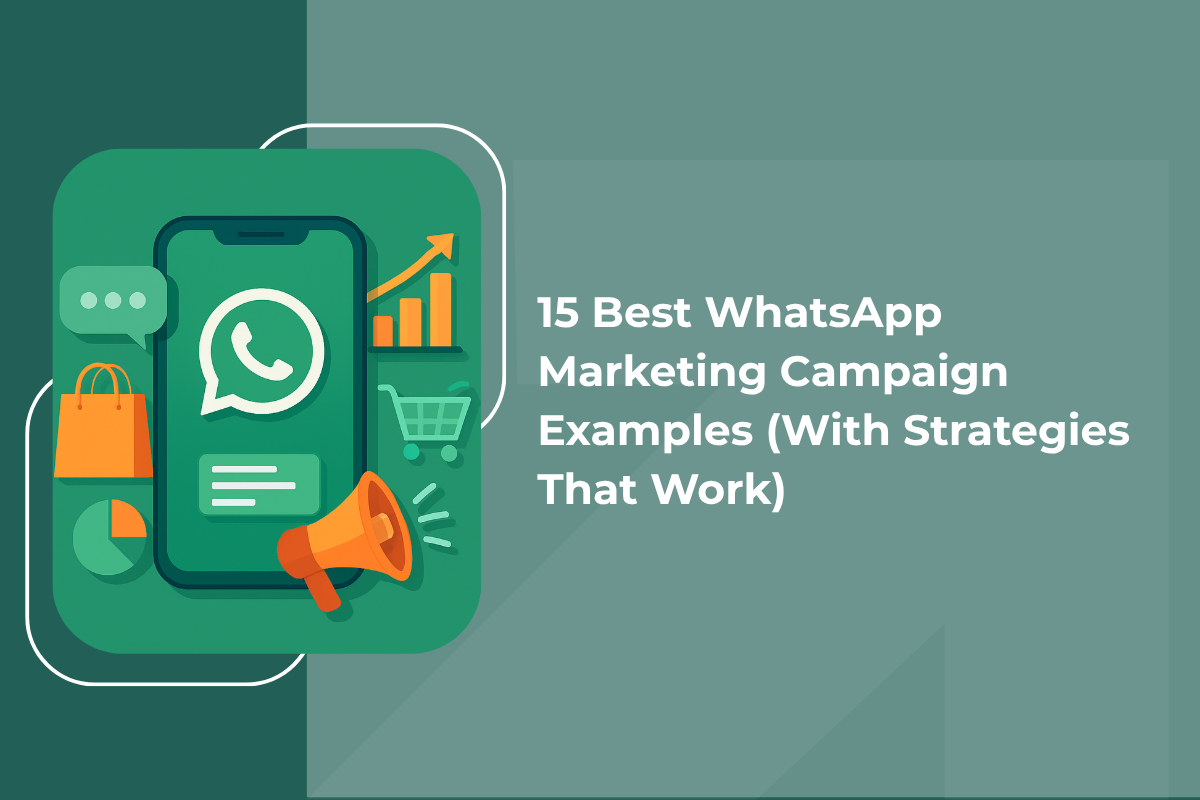
15 best WhatsApp marketing campaign examples (2026)
Think about the last time you ignored a WhatsApp message. Hard to recall, right? That is exactly what makes WhatsApp one of the most powerful marketing channels available to businesses today.
WhatsApp has crossed 2.78 billion monthly active users globally, yet it still feels personal. While email campaigns struggle to achieve open rates above 20%, WhatsApp messages consistently deliver open rates of 98%. Click-through rates on WhatsApp promotional content range between 45% and 60% - figures that most email marketers can only dream of.
In this guide, you will find 15 real WhatsApp marketing campaign examples drawn from global brands across industries, a breakdown of what makes each strategy work, and insight into how AI-powered tools like GrowEasy are making it easier than ever to launch high-converting campaigns.
Whether you are just getting started or looking to sharpen your existing WhatsApp campaign strategy, this blog has something useful for you.
Why WhatsApp marketing campaigns work so well
The numbers tell a clear story, but the real reason WhatsApp marketing works goes deeper than open rates. WhatsApp sits at the intersection of immediacy and intimacy. Users treat it as a personal space for real conversations. When a brand shows up there with a relevant, well-timed message, it does not feel like advertising. It feels like a conversation.
High open and click-through rates
WhatsApp messages are opened by around 80% of users within the first five minutes. No other channel comes close to that speed of attention.
Personalised at scale
Dynamic variables like names, order details, or city-based messaging let businesses send messages that feel one-to-one even when reaching thousands simultaneously.
Real-time engagement
Users typically respond to WhatsApp messages within 45 seconds, compared to hours or days with email. That speed matters enormously for lead follow-ups.
Better conversion than other channels
Brands using WhatsApp effectively report conversion rates of 45 to 60% for promotional content, vs a modest 2 to 5% for email and SMS campaigns.
WhatsApp has evolved from a support tool into a full-funnel marketing channel - capable of driving awareness, capturing leads, nurturing prospects, and closing sales. With AI-powered automation, businesses can now run personalised, segmented campaigns at scale without a large team behind them.
What is a WhatsApp marketing campaign?
A WhatsApp marketing campaign is a structured effort by a business to reach, engage, or convert its audience through WhatsApp messages. Unlike a one-off notification, a campaign is built around a specific goal, a defined audience, and a clear call to action.
Businesses use the WhatsApp Business API to send messages at scale, automate flows, and integrate WhatsApp with their CRM and ad platforms. There are four main types:
- Promotional campaigns
Designed to drive immediate action. These include flash sales, product launches, festival offers, and discount announcements sent to segmented contact lists. - Transactional campaigns
Deliver information customers expect and need - order confirmations, shipping updates, appointment reminders, and payment receipts. These messages tend to have the highest open rates of all. - Conversational campaigns
Invite dialogue rather than pushing a message. Examples include welcome flows, product discovery assistants, and customer feedback conversations, often powered by chatbots or live agents. - Retargeting campaigns
Re-engage people who showed interest but did not convert. Abandoned cart reminders, re-engagement messages for dormant leads, and follow-up sequences after ad clicks all fall here.
Key elements of a high-converting WhatsApp campaign strategy
Audience segmentation
Sending the same message to everyone on your contact list is one of the fastest ways to get blocked or reported as spam. Effective WhatsApp campaign strategy starts with dividing your audience into meaningful groups based on interest, location, behaviour, purchase history, or funnel stage. When your message matches what that specific group cares about, response rates climb.
Personalisation
WhatsApp is a personal channel. Messages that start with a customer's name and reference something relevant to them - a product they viewed or a city they are in - feel different from generic broadcasts. Dynamic variables in approved message templates make this scalable without manual effort.
Timing and automation
Sending a promotional message at 2 AM or following up on a lead three days after their inquiry will hurt your results. Smart scheduling and automated trigger-based messaging ensure that your campaigns reach people at the moment when intent is highest.
Clear call to action
Every WhatsApp message should tell the recipient exactly what to do next. Whether that is "Reply YES to book a demo," "Click here to claim your offer," or "Tap the button to view your order," a single, specific call to action removes ambiguity and makes it easier for people to respond.
WhatsApp strictly requires that businesses only message users who have opted in to receive communications. Sending messages to people who have not consented is not just a poor strategy - it puts your account at risk of being blocked permanently. Build a permission-based contact list from the start.
One thing worth noting: AI tools like GrowEasy now automate many of these processes, from audience segmentation to campaign scheduling and performance tracking. This makes it possible for small businesses to run campaigns that were previously only accessible to large marketing teams with big budgets.
15 best WhatsApp marketing campaign examples
These examples span a range of industries and goals. Each one illustrates a specific strategy you can adapt for your own business.
Welcome campaign
A direct-to-consumer skincare brand sends an automated welcome message the moment someone opts in through their website or an ad. The message introduces the brand, offers a first-purchase discount, and invites the customer to explore the product range through a catalog link.
First impressions matter. By responding instantly and providing immediate value, the brand reduces the gap between interest and action. The discount creates urgency without being pushy. A welcome campaign is not just a greeting - it is your first conversion opportunity. Set it up once and let automation do the work every time someone new joins your list.
Product launch campaign (Big Billion Days)
Flipkart launched an automated WhatsApp chatbot for its Big Billion Days sale, personalised with the voice of Bollywood icon Amitabh Bachchan. The chatbot used rich media including images, audio, and video to engage users in product discovery and pre-sale excitement. The result was 3.5 times more conversions and $2.5 million USD in revenue directly attributed to the WhatsApp campaign.
Flipkart met its audience where they were already spending time and turned a product announcement into an experience. A product launch on WhatsApp should be an event, not just a message. Use rich media, interactivity, and exclusivity to make your audience feel like they are getting early access to something special.
Flash sale campaign
An eCommerce fashion retailer sends a 24-hour flash sale alert to a segmented list of customers who had previously purchased in a similar category. The message includes the discount code, a countdown reference, and a direct product link - nothing else.
Scarcity and relevance are a powerful combination. Because the audience had already shown interest in the category, the offer felt personal rather than generic. Flash sale campaigns on WhatsApp outperform email because messages are read within minutes, not hours. Segment your audience carefully and keep the message short and action-focused.
Abandoned cart recovery campaign
An online home decor brand sends an automated WhatsApp message to shoppers who added items to their cart but did not complete checkout. The first message arrives one hour after abandonment with a friendly reminder. A follow-up with a small discount goes out 24 hours later if there is no response. Studies show companies using WhatsApp for cart recovery see up to a 25% drop in abandonment rates.
Abandoned cart WhatsApp campaigns are among the highest-ROI automations you can set up. The conversational tone feels less like a sales push and more like a helpful reminder. The key is timing: reach out while the purchase intent is still warm.
Personalised recommendation campaign (Beauty Tips on WhatsApp)
Sephora ran a "Beauty Tips on WhatsApp" campaign where subscribers received curated product recommendations, tutorials, and expert tips based on their skin type and beauty preferences. The experience was designed to feel like a personal beauty advisor in the customer's pocket.
By leading with useful content instead of promotions, Sephora built trust and kept subscribers engaged over time. When product recommendations did appear, they carried far more credibility. Personalised recommendations work best when they feel earned - segment your audience, understand their preferences, and lead with value before introducing a product.
Lead nurturing campaign
A real estate developer uses WhatsApp to nurture leads who expressed interest in a project but did not book a site visit. The sequence includes project highlights, floor plan images, testimonial videos, and a gentle prompt to schedule a call with the sales team - delivered over several days.
Real estate purchases involve significant consideration. Regular, informative touchpoints keep the brand top of mind without overwhelming the prospect. Lead nurturing on WhatsApp is not about volume - it is about consistency. Map out the decision journey for your audience and create content that answers their questions at each stage.
Event reminder campaign
An online education platform sends automated WhatsApp reminders to registered users 48 hours, 24 hours, and 1 hour before a webinar. The final message includes the live join link, reducing no-shows significantly.
WhatsApp reminders are far more effective than email reminders because they are seen and acted on almost immediately. The direct join link in the final message removed the friction of having to search for access details. Use WhatsApp as your event communication backbone - automated reminders reduce no-shows, and post-event follow-ups can continue the conversation.
Re-engagement campaign (Don't Call Mom, Call ADAC)
ADAC, Germany's largest automobile club, launched a campaign targeting young adults who had no connection to the brand. For six weeks, 20 ADAC experts answered any question sent on WhatsApp - from car advice to life questions - for 14 hours a day. They also brought in influencers to respond to messages. The campaign earned 140,000 WhatsApp messages and 20 million impressions on its campaign video.
Re-engagement does not always require a discount. By showing up as genuinely useful to a demographic that had no prior reason to care about the brand, ADAC created real emotional resonance. Sometimes, demonstrating unexpected value is enough to rebuild attention and interest.
Customer feedback campaign
A D2C food brand sends a WhatsApp message to customers within 48 hours of delivery, asking them to rate their experience with a quick reply option. Customers who respond receive a thank-you message with a loyalty discount for their next order.
WhatsApp makes it easy to respond with minimal effort. The immediate reward tied the feedback action to a positive outcome, increasing both completion rates and repeat order likelihood. Customer feedback campaigns on WhatsApp see far higher response rates than email surveys - keep the task short, respond immediately, and always acknowledge the customer's input.
Order update and personalised upsell campaign
Tata CLiQ used personalised WhatsApp campaigns tied to festive sales like Diwali and Black Friday. Customers received tailored product messages, order updates, and post-purchase follow-ups based on purchase behaviour. The campaign generated a 10x return on investment with a 57% click-through rate on WhatsApp.
Order update campaigns are a missed opportunity when treated as purely transactional. Adding personalised product recommendations or loyalty incentives turns routine notifications into revenue-generating touchpoints. Customers received messages that felt relevant rather than generic, which drove higher engagement and conversion.
Referral campaign
A fitness app runs a WhatsApp referral campaign where existing users receive a personalised message with a unique referral link. Both the referrer and the new user receive a free month of premium access when the referral converts.
WhatsApp is how people already communicate with friends. Referral messages shared through WhatsApp feel personal rather than promotional, which significantly increases the likelihood of the recipient acting on them. Make the reward meaningful, the sharing action effortless, and the tracking automatic.
Loyalty programme campaign
Domino's used WhatsApp as the backbone of a three-part loyalty strategy: driving orders through daily messages to in-store customers, converting new customers into regulars through personalised messages, and incentivising repeat purchases through a structured rewards programme.
By treating WhatsApp as a relationship channel rather than a broadcast tool, Domino's moved customers through a deliberate journey from first-time buyers to loyal regulars. Loyalty programmes live or die by consistency of communication - WhatsApp allows you to stay present in customers' lives in a way that feels natural rather than intrusive.
Educational content campaign (virtual cooking curriculum)
Maggi Germany created a free virtual cooking curriculum delivered entirely through WhatsApp. A digital assistant named Kim guided customers with step-by-step cooking instructions and shared recipe videos. Within the first 8 weeks, the campaign generated 200,000 messages, a 4.2-point lift in ad recall, and a 3-point lift in campaign awareness.
Educational WhatsApp campaigns build the kind of brand trust that promotional campaigns cannot. By becoming genuinely useful in customers' daily routines, Maggi achieved brand awareness that no traditional ad could replicate. If your product solves a recurring problem for your audience, build a content experience around that problem.
Click-to-WhatsApp ad campaign
Unilever launched its Comfort fabric softener in Brazil with a campaign combining 10,000 billboards displaying a WhatsApp number. People who messaged the number were greeted by a chatbot called MadameBot, which shared fabric care tips, product demos, and a 50% discount offer with free shipping. The campaign generated 290,000 messages from 12,000 unique customers and a 14-fold increase in sales.
Click-to-WhatsApp campaigns work across both digital and offline channels. The billboard created intrigue, WhatsApp made engagement effortless, and the discount sealed the deal. The key is creating a strong reason to initiate the conversation, and then delivering immediate value when they do. For a step-by-step guide to running CTWA campaigns in India, see the complete guide to Click-to-WhatsApp ads for Indian businesses.
Seasonal and festival campaign
A jewellery brand segments its customer list by past purchase category and sends personalised WhatsApp messages ahead of Diwali, featuring relevant gift recommendations, festive packaging options, and early-bird discount codes valid for 48 hours.
Seasonal campaigns on WhatsApp outperform email because messages are read almost immediately, which matters enormously when the offer window is short. Personalisation ensures each recipient sees products that are actually relevant to them. Plan your seasonal campaigns in advance, segment by purchase behaviour, and build in urgency with time-limited offers. The combination of timing and relevance is what drives results.
5 real-world WhatsApp campaign case studies
Mercedes-Benz Turkey: conversational lead generation
Hellmann's WhatsCook: value-first conversion
Takko Fashion: offline-to-online loyalty via WhatsApp
Habuild: scaling a wellness community with automation
Zostel: cutting response time and lifting bookings for a hostel chain
How GrowEasy helps you run high-converting WhatsApp campaigns
Running a great WhatsApp marketing campaign requires more than just a good idea. It requires the right tool to execute at scale without losing the personal touch that makes WhatsApp effective in the first place.
GrowEasy is an AI-powered marketing platform built specifically for small and medium businesses that want to generate leads, run WhatsApp campaigns, and manage their entire marketing funnel from one place.
AI-powered campaign creation
GrowEasy's AI generates ad creatives, message copies, and audience targeting recommendations based on your business details and campaign goals. Instead of spending days planning a campaign, you can go live in under 5 minutes.
WhatsApp automation and bulk messaging
Built on Meta's Official WhatsApp Cloud API for 100% inbox delivery. Upload CSV lists, personalise with dynamic variables, schedule for festivals or launches, and automate follow-ups. See WhatsApp marketing solutions.
Smart lead qualification
GrowEasy's AI chatbot engages every incoming lead instantly, asking qualification questions before routing the conversation to your sales team.
Click-to-WhatsApp ads integration
Integrates directly with WhatsApp, Facebook, Instagram, and Google ad campaigns. Start running WhatsApp ad campaigns with a budget as low as Rs. 1,000.
Real-time analytics and ROI tracking
Every campaign comes with detailed analytics covering sent, delivered, read, and clicked metrics, exportable for optimising future campaigns.
Built-in CRM at no extra cost
Classify leads, add notes, track the pipeline, and manage follow-ups from the same platform. Explore the full feature set on the WhatsApp Marketing page.
GrowEasy offers a free plan for small businesses with campaigns going live in under 5 minutes and a starting budget as low as Rs. 1,000. No agency, no technical setup required.
Best practices to create winning WhatsApp campaigns
- 1. Keep messages short and conversational
WhatsApp is a fast-moving channel. People scan messages quickly. Get to the point in the first line, and use plain language that sounds like it came from a human rather than a marketing team. - 2. Use personalisation tokens wherever possible
Addressing customers by name and referencing their specific situation or past behaviour significantly increases response rates. - 3. Control your message frequency
Over-messaging is one of the most common mistakes in WhatsApp marketing. Build frequency rules into your campaign setup from the start. - 4. Use rich media to add value
WhatsApp supports images, videos, PDFs, voice notes, and interactive buttons. Campaigns that use rich media see higher engagement than text-only messages. - 5. Optimise your timing
For most consumer audiences, late morning and early evening on weekdays deliver the strongest engagement. Avoid early mornings and late nights.
Common mistakes to avoid in WhatsApp marketing
- Messaging without consentSending WhatsApp messages to people who have not opted in violates WhatsApp's policies and damages your brand reputation.
- Over-messaging your audienceEven engaged customers will tune out or unsubscribe if they receive messages too frequently.
- Sending generic, untargeted contentA broadcast with no segmentation feels impersonal and irrelevant to most recipients.
- Lacking a clear follow-up strategyIf someone responds to your message, you need a process for what happens next. Define your follow-up flow before you send.
- Ignoring campaign analyticsTeams that review open, read, click, and conversion data and adjust their approach consistently outperform those that do not.
The future of WhatsApp marketing campaigns
WhatsApp marketing is still in its early growth phase, and the capabilities available to businesses are expanding rapidly.
AI-driven automation
Chatbots that qualify leads, answer product questions, process bookings, and escalate to human agents seamlessly are no longer just for enterprise companies.
Conversational commerce
Brands are completing entire purchase journeys within a WhatsApp conversation - from discovery to checkout to post-purchase support - without redirecting to a website.
Hyper-personalisation
Messages informed by real-time behavioural triggers will become the standard expectation rather than a differentiator.
Deeper CRM and ad integration
Click-to-WhatsApp ads are already one of the fastest-growing ad formats on Meta. Tighter CRM integration will enable more precise targeting and attribution.
The WhatsApp marketing campaign examples in this guide all treat WhatsApp as a relationship channel rather than just another broadcast tool. The brands that get the best results are the ones that show up with relevant, personalised messages at the right moment - and then follow through when the conversation begins.
Frequently asked questions
Easy and fast setup
Marketing Doesn't Have to Be Hard. Let AI Do the Work.
Start getting leads in 5 minutes – no marketing team needed.
Start Now