
Summary:
Demand generation and lead generation are distinct yet complementary marketing strategies. Demand generation focuses on creating awareness and interest in a product among potential customers who are not yet ready to buy, while lead generation targets those who are actively seeking solutions and ready to engage. Integrating both strategies effectively can enhance marketing efficiency, reduce costs, and increase conversion rates by nurturing potential customers through the entire buyer's journey.
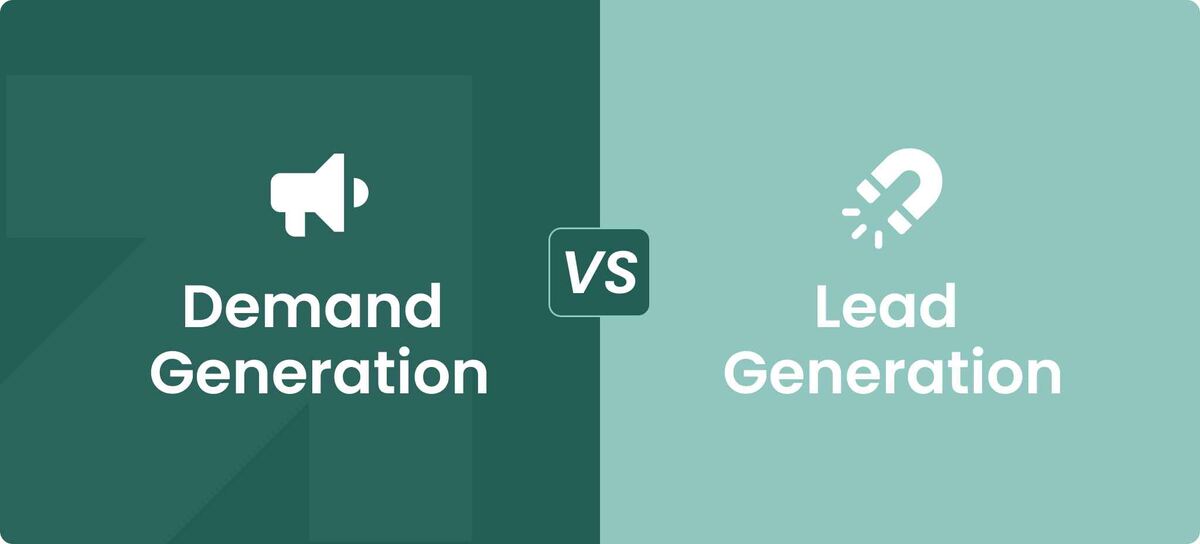
Demand generation vs lead generation: breaking down the differences for smarter marketing
You have run the ad. The clicks are coming in. But conversions are not. Or maybe the opposite: you are getting inquiries, but they are cold, unqualified, and clearly not ready to buy.
The root cause is usually the same: mixing up demand generation and lead generation, or relying on one while ignoring the other. Demand Generation enables you to reach over 3 billion people, and 91% of marketers are moving forward with lead generation strategies for their marketing efforts.
These two strategies are not the same thing. They live at different stages of the buyer's journey and serve different purposes. Get both right, and your marketing starts working like a system instead of a slot machine
What is demand generation?
Demand Generation is everything you do to make your market want what you offer, before they're ready to buy.
At any given time, only about 5% of your potential customers are actively seeking a solution like yours. The other 95% are unaware of the problem or are not thinking about it. Demand Generation is how you speak to that 95%, patiently and usefully, so that when they are ready, you're already the name they trust.
Common demand generation tactics
- Blog posts, YouTube videos, and podcasts that are ungated and free to access
- Educational social media content addressing real pain points - without asking for anything in return
- Webinars and live sessions that build your brand as a trusted voice in your category
- SEO content answering questions your buyers are already searching for on Google
- Short-form video on Reels or YouTube Shorts showing your expertise in 60 seconds or less
Demand generation does not ask for anything upfront. It earns attention by being useful and builds the kind of trust no paid campaign alone can manufacture. You are investing in the future readiness of your market - not chasing people who are not yet ready to engage.
What is lead generation?
If demand generation earns someone's interest, lead generation is the moment you ask: "Can we stay in touch?"
Lead Generation is the process of capturing contact information from people ready to engage and moving them toward a sales conversation. It targets people who already recognise their problem, are comparing options, and just need to find the right solution.
Here are few of the lead Generation tactics:
- Gated resources like eBooks, guides, and calculators exchanged for contact details
- Demo request and inquiry forms on your website
- Click-to-WhatsApp ads that start a direct conversation when someone shows interest
- Paid search ads targeting high-intent keywords like "best interior designer in Bangalore"
- Retargeting campaigns re-engaging people who visited your site but did not convert
Lead generation asks for something: a name, a number, a business email. In exchange, it delivers a specific offering, such as a consultation, a quote, or a demo.
Not sure what your lead acquisition is costing you? Use GrowEasy's free Lead Cost Calculator to benchmark your cost per lead against industry averages.
Demand generation vs lead generation: the key differences
Here is the clearest answer to the question of what the difference is between lead generation and demand generation.
| What we are comparing | Demand generation | Lead generation |
|---|---|---|
| Funnel stage | Top of funnel | Middle and bottom of funnel |
| Who it speaks to | The 95% not yet in-market | The 5% actively evaluating options |
| What it asks for | Nothing. It gives first. | Contact info in exchange for value |
| Content style | Ungated, freely accessible | Gated, conversion-focused |
| Pace of results | Long-term brand equity | Near-term pipeline and revenue |
| Success metrics | Traffic, engagement, brand searches | CPL, MQLs, conversion rate |
You can run lead generation without demand generation, but you'll always pay more per lead and convert fewer of them. Build the demand first, and lead generation becomes far more efficient.
Brand awareness, demand generation, lead generation: where does your brand fit in?
Brand awareness is not a separate strategy. It is the very first chapter of demand generation. Think of it as three layers of one continuous journey:
Brand awareness.
"I've heard of them." Pure recognition, your name and identity, before a buying decision is even on the table.
Demand generation.
"I think I might need what they offer." Recognition becomes relevant, a coaching institute sharing student success stories. A construction company publishes renovation tips shared across homeowner groups. Brand awareness made you known. Demand generation makes you meaningful.
Lead generation.
"I want to speak to them." The inquiry form gets filled. The WhatsApp message gets sent. The demo gets booked.
Brand awareness is being recognised at an event. Demand generation is having a conversation good enough that someone asks for your card. The lead generation is following up and booking the meeting.
Demand capture vs demand creation: a distinction most marketers miss
Within demand-building, there are two different jobs that most people lump together.
Demand creation reaches people who don't yet know they need your solution. You're introducing a problem and building awareness from scratch.
Demand capture appears to people who already know they have a problem and are actively searching for a fix. You're not convincing anyone. You're just making sure you're the answer they find.
A financial advisory firm example:
An Instagram guide titled "Why Your Mutual Fund SIP Might Not Be Enough" reaches salaried professionals who have not considered hiring a financial advisor yet. You are planting the seed of a problem they were not thinking about.
A Google Search ad appears when someone types "best financial advisor in Mumbai" - catching someone already in buying mode today. You are harvesting intent that already exists.
One plants the seed. The other harvests it. GrowEasy's AI Ads Manager runs campaigns across Meta, Google, and WhatsApp, automatically optimised in real time, so you're present at both stages from one dashboard.
When to prioritise one over the other - and when to run both
Lean into demand generation when:
- You are a new brand that your market does not know yet
- Buyers are not actively searching for your product category
- Your sales team keeps saying "these leads are not ready"
- You are building long-term brand equity alongside near-term revenue
Lean into lead generation when:
- You need qualified inquiries quickly and predictably
- You are in real estate, healthcare, education, or financial services
- You need measurable ROI tracked back to every rupee spent
- Your audience is already searching for solutions like yours
When you want a pipeline that is full and efficient - not one that alternates between floods and droughts - running demand generation and lead generation in parallel is the answer. GrowEasy supports businesses at exactly this stage. Whether you are in real estate , healthcare , financial services , or higher education , the platform handles demand-building campaigns and high-conversion lead capture, all in one place.
How the smartest marketers integrate all three
Demand generation and lead generation aren't two strategies competing for your budget. They are one continuous loop, and each one makes the other stronger.
-
1
Demand generation warms the market
Your content reaches potential buyers over time. No pressure. You are becoming the name they trust months before they need you. When the time comes, they already have positive associations with your brand - which means lower ad costs and higher conversion rates at every stage below.
-
2
Lead generation catches the ready ones
When a warm prospect is ready to explore, your lead-capture mechanism is right there. Because they already know you from the demand generation phase, conversions are faster and lead quality is higher. You are not convincing a stranger - you are welcoming someone who already trusts you.
-
3
Lead generation data sharpens demand generation
Every question a lead asks, every objection they raise tells you exactly what your market needs to hear. The loop tightens. The system gets smarter.
GrowEasy powers this entire loop from a single place. The AI Ad Copywriter creates demand-building creatives at scale. The Facebook Ads Audience Builder targets the right people for lead capture. The built-in CRM tracks every lead from first interaction to closed deal.
For B2B teams, GrowEasy's guide to generation B2B leads covers an integrated approach for longer sales cycles.
The question was never "demand generation or lead generation." It was always about running the right strategy at the right stage, with both working as one coherent system.
Demand Generation makes your market want what you offer. Lead Generation captures the ones who are ready to act. Demand capture ensures you're present the moment they go searching.
The AI ad copywriter creates demand-building creatives at scale. The Facebook audience builder targets the right people for lead capture. The built-in CRM tracks every lead from first interaction to closed deal. Campaigns across Meta, Google, and WhatsApp are automatically optimised in real time - so you are present at every stage of your buyer's journey without managing multiple tools.
Together, the three create a pipeline that's full, efficient, predictable, and sustainable. If you're ready to build that system without the complexity or the generation fees, GrowEasy gives you everything in one place: AI-powered ad campaigns, intelligent targeting, lead capture, WhatsApp follow-up, and a built-in CRM, all designed to get you qualified leads in under five minutes.
Frequently asked questions
Easy and fast setup
Marketing Doesn't Have to Be Hard. Let AI Do the Work.
Start getting leads in 5 minutes – no marketing team needed.
Start Now